
Voting is supposed to be the most direct way for Americans to shape their government. Yet, the rules around who can lead the country haven’t kept up with today’s realities. While the Constitution requires presidential candidates to be at least 35 years old, it never addresses the question of how old is too old for the job. As our political leaders age and the demands of the presidency intensify, it’s time to seriously consider a maximum age limit for the nation’s highest office.
From nonstop public scrutiny to decision-making under pressure, the presidency is arguably the most demanding job in the country. According to Pew Research Center data, a staggering 79% of Americans favor maximum age limits for elected federal officials in Washington, D.C. Support for age limits crosses party lines, with 82% of Republicans and 76% of Democrats favoring the idea.
A maximum presidential age limit would require a constitutional amendment, creating a significant obstacle for implementation. Under Article V of the Constitution, amendments must be approved by two-thirds of both houses of Congress and ratified by three-fourths of states, making constitutional change intentionally difficult. Because of these requirements, a presidential age limit may be viewed as politically unrealistic.
However, constitutional difficulty does not make reform impossible. The Constitution has been amended 27 times, including the 22nd Amendment, which established presidential term limits in response to concerns about executive leadership. If broad public support continues to grow, the amendment process provides a constitutional pathway for adopting a maximum age requirement.
Opponents of a maximum age limit argue it would deprive the nation of wisdom and experience, which are valuable qualities that older leaders bring. They point out that the Founding Fathers intentionally left out an upper age restriction, valuing insight that comes with age. This perspective is not without merit: the experience gained over decades can be a robust asset in navigating the complexities of the presidency.
According to BBC Future, older brains have better “crystallized intelligence,” meaning they have a wider foundation of knowledge, vocabulary, and established patterns of thinking that can help them solve complex problems. Furthermore, adding arbitrary age limits discriminates against older demographics, essentially punishing capable and healthy leaders just because of a number on their birthdate.
Conversely, while older individuals have a wealth of past knowledge, the Harvard Political Review argues that aging can reduce “fluid intelligence,” the ability to process new information, adapt to unfamiliar challenges, and solve novel problems. Any debate over a leader’s capacity must weigh this decline in processing speed against the undeniable value of wisdom.
Medical researchers have documented that certain mental abilities become less efficient with age. According to the National Institute of Aging, aging is associated with declines in working memory and the ability to pay attention to multiple pieces of information at once. While these changes vary from person to person, the presidency leaves little room for error. Presidents routinely receive classified intelligence briefings, respond to military developments, and make decisions that can affect millions of people in a heartbeat.
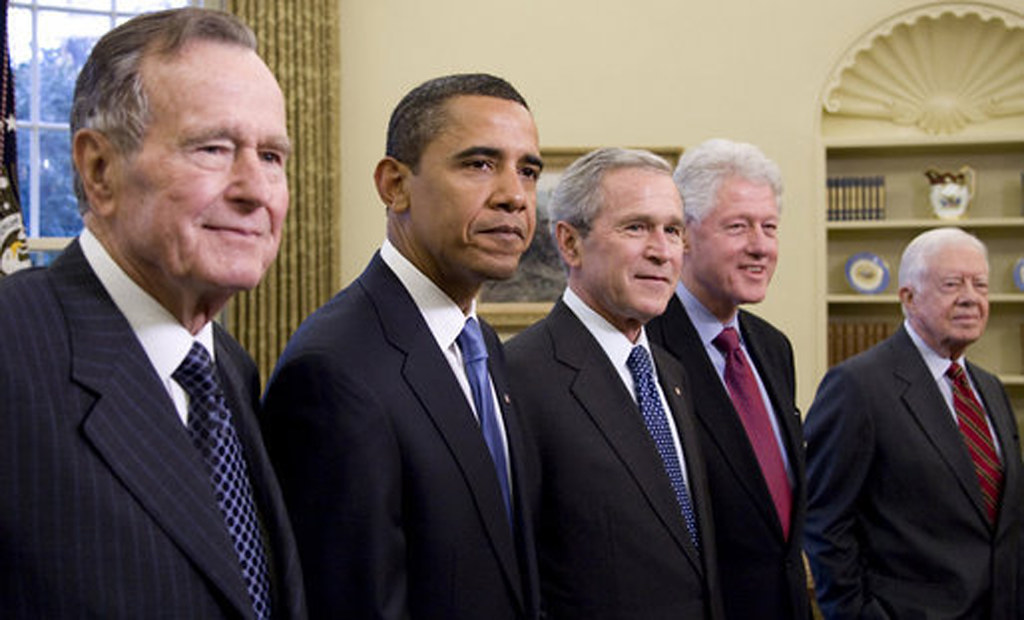
The numbers also point to a growing gap between the age of political leaders and the broader workforce. According to Statista, the average president takes office at about 57 years old. Recent presidents have been much older. Joe Biden left office at 82 and Donald Trump began his second term at 78. By comparison, the Social Security Administration sets the full retirement age for most Americans between 66 and 67, highlighting the gap between national leadership and typical workforce expectations.
The responsibilities of the presidency have also grown dramatically over time. The White House Historical Association notes that the responsibilities of the presidency have expanded significantly over time as the federal government has grown in size and complexity. While age alone doesn’t determine a person’s ability to lead, the scope and pace of the modern presidency place extraordinary demands on whoever occupies the office.
The Constitution already recognizes that age matters by setting a minimum age for the presidency. Establishing a reasonable maximum age limit would acknowledge that age can matter at the other end of the spectrum as well.