
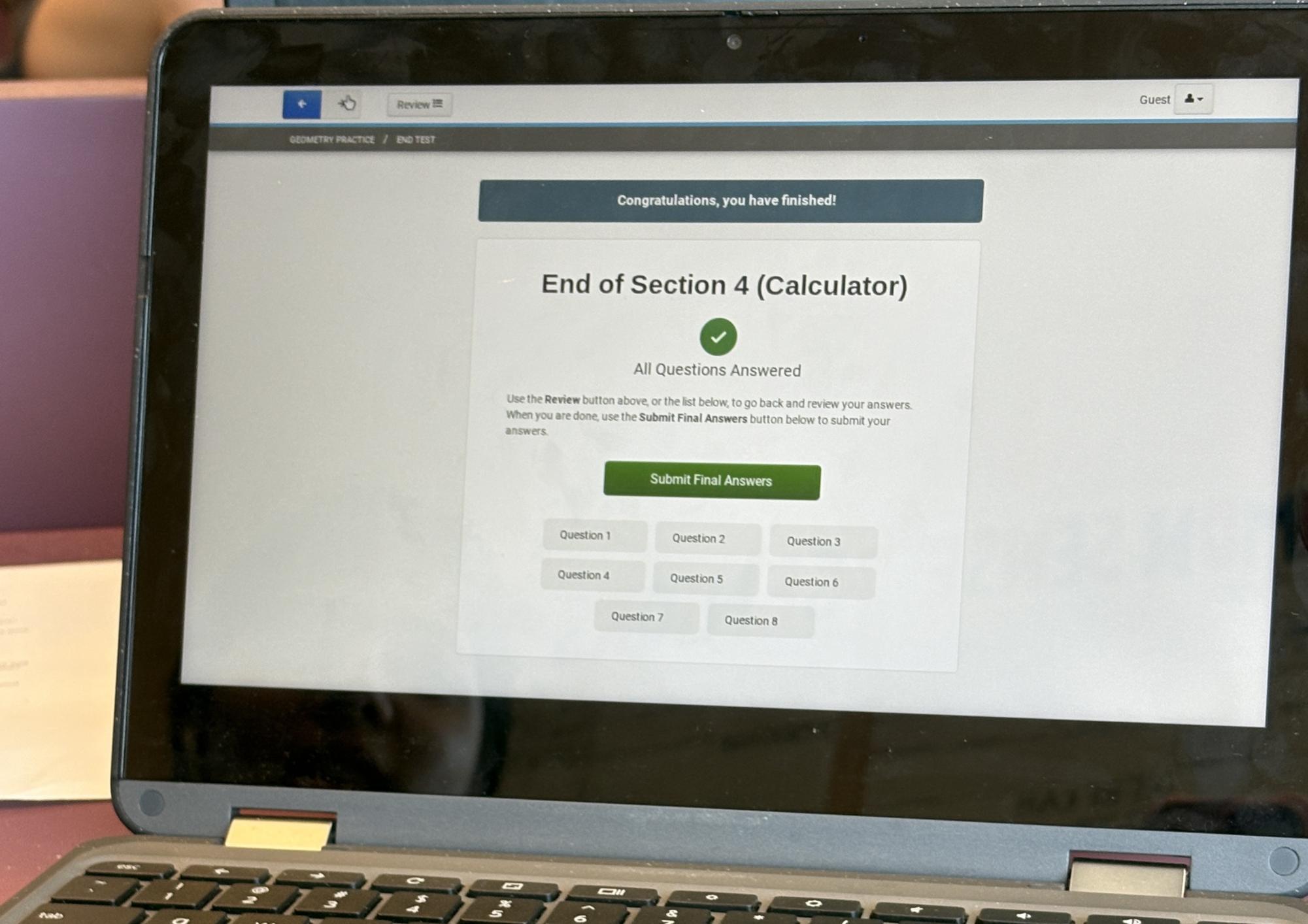

A standardized test can come in different forms for elementary, middle, and high school students. These tests can feel like a nuisance to both the students who take these tests and the teachers who proctor them. If these tests are so annoying, is there a good reason to take them?
One opinion is that standardized testing dissolves underlying academic favoritism that exists within grading. According to senior Lily Singer, an editor and writer for Eagle Eye News, a teacher may have biases that impact the grades they give students, something that is eliminated in standardized testing. “Additionally, like any other human being, teachers can have either a conscious or unconscious bias that can affect the grades they give. For example, they may award a higher grade to a student with good participation or attendance and a low grade to a student who rarely pays attention… standardized tests play an important role when it comes to combating teacher bias and creating an equal playing field for students to display their skills,” Singer said.
However, there can be underlying biases in any kind of assessment based on environment and familiarity. Taking a test in a room with a teacher who is familiar to a student may seem less stressful than taking the same assessment in an unknown place proctored by unfamiliar adults. The tone the directions are spoken in, volume of the class, time the test was taken, and number of people in the room all have the potential to alter potential stress levels.
Another reason why standardized testing may be seen as a good idea is that it holds both students and teachers accountable. According to Victoria McDougald, the chief of staff for the Thomas B. Fordham Institute, standardized testing is a reliable way to monitor how well a school performs academically. “Standardized tests are the most reliable measures we have for gauging performance at the school level, shedding light on systemic inequities, and holding schools accountable for their academic performance,” McDougald said.
It is important to ensure a school’s performance is properly examined so that help can be given in areas that it is needed. However, the process of looking at a school as a whole lumps the student body into one. The outlying scores in the data might be overlooked and not properly represented.
Others may consider analyzing the standardized test results of a student as a necessary action. Knowing how a student is performing can help guardians and teachers better understand a specific student. “Test data help bridge this disconnect by providing parents and caregivers with important, objective information about their students’ academic achievement and progress… Just as I wouldn’t skip my child’s annual physical at the doctor’s office, I wouldn’t opt out of testing that provides important data about how my child is doing and progressing academically,” McDougald said.
However, standardized testing is not the best representation of a student’s success from a whole year. A score from an assessment taken on one day could have been completely different if it was taken on a different day. Defining a student from one data point can be flawed, as there are factors that have the potential to alter the score.
Students who have testing anxiety may struggle with high pressure tests and not perform to their best ability. Even if they understand the material, being able to identify what they know in multiple choice and short answer questions can be stress producing.
Having to spend multiple hours taking standardized assessments can be mentally draining for the students taking them. The long amounts of studying and hours spent answering can feel excessive, especially to students who have multiple tests. Advanced Placement (AP), International Baccalaureate (IB), statewide tests and college entrance exams can have large impacts on the futures of students.
The information received from a standardized test can still be flawed with the possibility of score inflation within the test results. The pressure of reeling in only the best scores can encourage teachers to focus more on what’s on the assessment. Scores can be impacted on whether the students are taught closer to the curriculum or the test itself.
It’s still important for students to want to learn in school, with or without knowing the score. Academics can be so much more than the numbers and letters that define it, and students must grow to understand that the score of one test doesn’t define a person.