

The recent jump in temperature and UV rays indicates one thing: the start of summer. When walking into the first pool day of the year, a group of high schoolers sit in red bathing suits with whistles hanging from their necks. These teenage lifeguards hold major responsibility, but several have yet to even receive their drivers license. Being of such a young age, are high schoolers the most trust-worthy option to be overlooking pools?
By high school, students tend to lean away from a work-free summer toward employment. Teenagers often turn to lifeguarding.
The typical compensation for lifeguarding ranges from $15 an hour to $22 an hour, depending on the guard’s tasks and responsibilities. Accompanying the financial benefits, high schoolers lifeguard because it is seen as a “fun-in-the-sun job” alongside fellow teenagers. “I wanted to be occupied while working with friends and all of my friends do lifeguarding,” sophomore lifeguard-in-training Zenia Shaikh said.
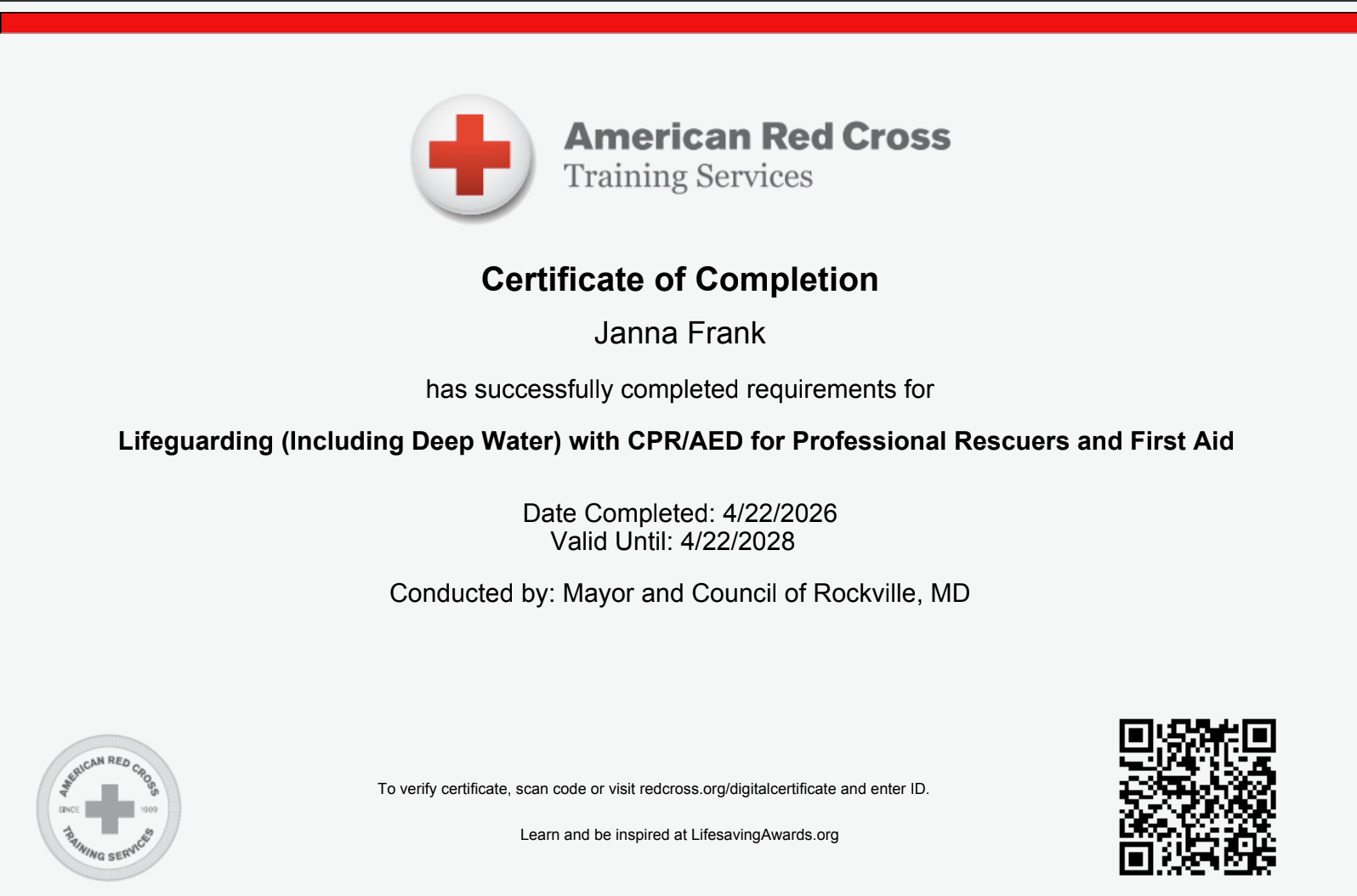
The training to become a lifeguard is fairly rigorous, requiring an interview, 16 modules of online learning and 20 hours of medical and in-pool training. After three skill assessments and a 50 question multiple choice exam, trainees who pass the exam with a score of 80% or higher receive lifeguard certification. “Lifeguard certification was a lot of hard work and studying,” sophomore lifeguard Evan Alagic said.
Though training is thorough and time-consuming, trust in each individual lifeguard comes from their dedication to the job. Guards who diligently observe when in the chair are bound to succeed when a situation arises. Conversely, guards who see being in the chair as an opportunity to relax and embrace the sun, lack dedication. A teacher at this school told a story of an experience with their daughter and a lifeguard at a pool. The teacher looked away from their three-year-old daughter for a split second and in that time, she had used the pool’s coping to reach the deep end, just under the teenage lifeguard’s chair. When asked about the situation of a toddler in the deep end, the lifeguard shrugged off the situation.
Additionally, when becoming a lifeguard, a teenager has to prove their ability to jump into the pool and save an adult, putting them on the extrication board. Regardless of their training, the physical strength of a teenage lifeguard can be of concern. If not sufficient in strength and endurance, a lifeguard may struggle carrying and moving a person during an emergency. “I think I could save someone a little bit bigger than me, but I don’t think I’m strong enough to save a larger person and keep myself and them afloat,” sophomore lifeguard Nicole Matcharadze said.
Overall, the question of whether a teenager should be trusted as a lifeguard falls on the individuality of the guard. A devoted, well-practiced teenage lifeguard is a strong choice to watch over a pool environment. On the other hand, teenage lifeguards prioritizing friends and a good tan over pool safety may cause doubts to swimmers’ safety.