
As I near the end of high school, I can firmly say that I have benefited the most from the learning I’ve done in class rather than the stressful late nights I’ve spent trying to teach myself concepts after spending a day in class not doing anything productive. My grades have always been better in classes that have me doing notes and engaging activities in class, and brief studying out of class.
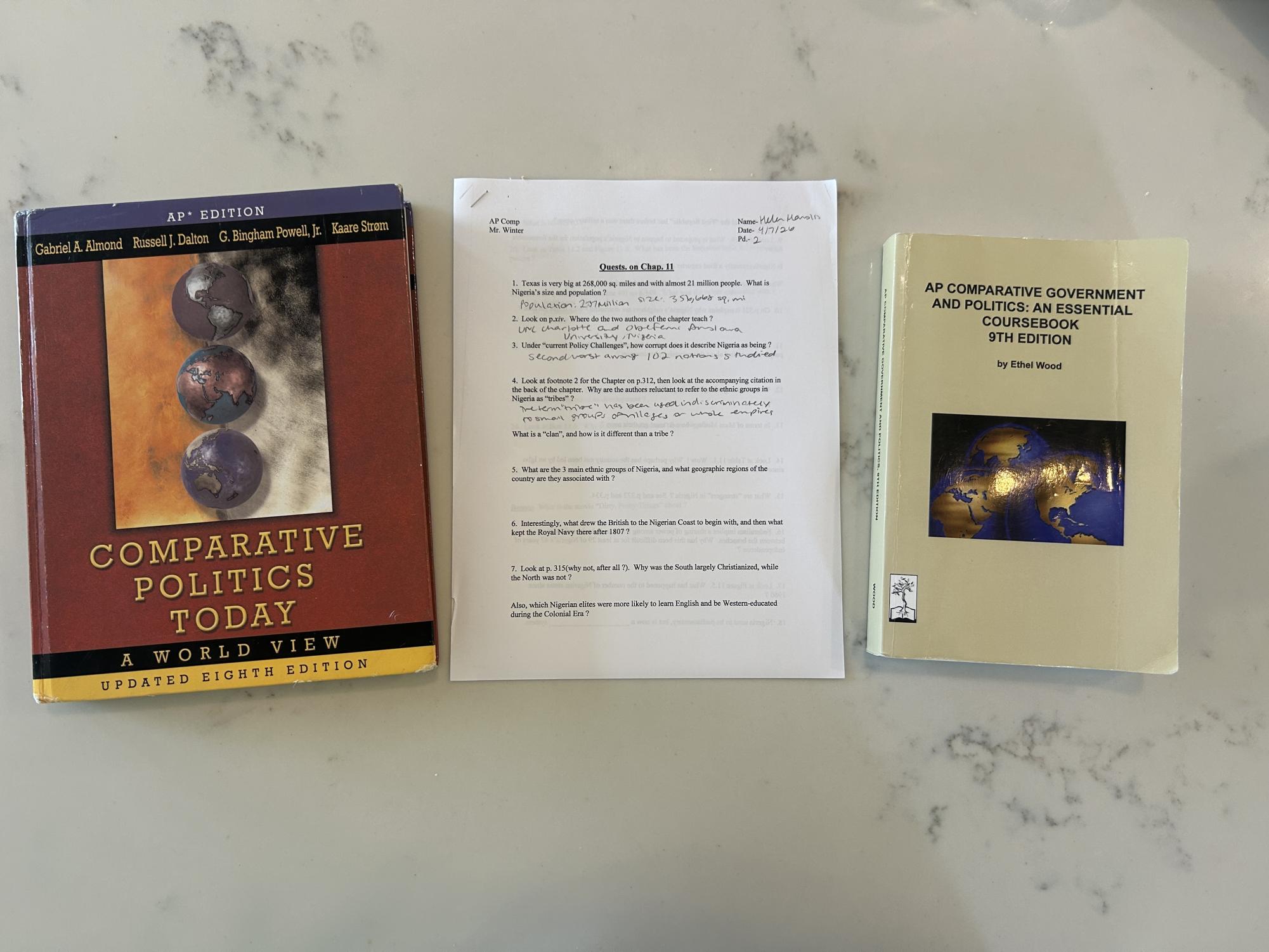
Math has always been the class that I knew I could never miss. Because of how densely packed and notes-heavy each math class is, I thought that missing even one of these important days would have disastrous effects on my grade. My AP Comparative Government class this year, however, does not give me the same feeling. Most, if not all, of the learning that we do for quizzes is done by reading our textbooks at home. In class we just discuss what we were supposed to be reading about at home, but as a senior in the second semester, I can’t say that I’m always caught up with my reading. Even the notes that we take are done on our own using the textbook to answer questions.
For me, this structure of learning is completely ineffective in helping me learn and fully retain knowledge on the subject. It seems like a waste of time to go to a class that doesn’t make me engage in the topics, which, as a visual learner, is extremely important for me to fully understand everything that I’m supposed to know. AP Comp. Gov. is not the only example of this that I have had to endure.
Still, not all history classes are structured like this. The AP World History class that I took last year was structured almost completely differently. Rather than always having work to do at home such as reading the textbook or using the textbook to complete a quest, in AP World I was barely given work to do outside of class besides the occasional project or studying for a quiz. This meant that just like with math, the 42 minutes we spent in class everyday were full of notetaking, loaded slides filled with information and informative videos or lessons. There are people who might have felt bored by these, especially during the first period, but I loved it. With this structure, I found that completing projects and studying for tests were much easier because I already retained so much information from just sitting through a class, which is why this was the easiest AP test that I have ever studied for.
People always tell you that academics in college is completely different from high school, and the most common difference is how independent learning is there. Despite being annoyed that I have to go home and learn what I hoped to be taught in school all on my own, I can’t help but imagine that this is actually preparing me for the lifestyle I am going to have to adapt in college. AP Research and Seminar are two classes that I have been told resemble a college course the closest and these were filled with long work days in class, and even longer hours working on the same project at home. Yet, I still believe that students would get more from their education in classes like social studies and science with a system that prioritizes in-class learning.