


No one imagines it would happen to them, yet on Feb. 9, an incident involving a shooter shook the stability of the school community. In response, MCPS superintendent Thomas W. Taylor instructed students to return to school the next morning. Those who returned were greeted by energetic counselors, additional security guards and staff members doing their best to make students feel comfortable.
In the weeks following the incident, the administration implemented several new policies in an attempt to improve safety. These changes included increased security, the elimination of the advisory period and new restrictions on student movement during lunch.
Supporters of these changes argue that restricting student movement allows administrators and security to monitor students more efficiently and maintain order. With students staying in designated areas, it may be easier for staff to track everyone. Additionally, with the pass system, students are still able to visit teachers during homeroom or lunch if they need help.
These changes come with a cost. While restricting student movement may make supervision easier for staff, the elimination of advisory and the limitation of lunch spaces have harmed students’ social and learning environments without generating a meaningful improvement in safety.
Previously, advisory gave students the freedom to choose either spending time with their friends, chatting with their teachers or seeking academic support. That period has now been replaced with a secured homeroom block, removing one of the only flexible parts of the school day. As a result, students have had fewer opportunities to connect with friends, particularly those they do not typically see. Junior Sreeyan Nampally said, “I’m not able to hang out with my friends as much, especially the ones that I don’t have many classes with anymore.”
Beyond social impacts, the shift from advisory to homeroom has created academic challenges. If students need help from a teacher or need to make up a quiz, they are required to obtain a pass beforehand from either that teacher or their homeroom teacher. This system also applies to the closed lunch period. This takes away from the beauty of advisory and lunch: the freedom it gave students to take initiative and seek help on their own terms. Sophomore Ariella Chi, who typically uses the advisory period for educational support said, “The effects I’ve seen is that people feel less incentive than normal to go ask for help during these free periods.”
Requiring a formal reason to see your teacher also weakens informal relationships that help build strong student-teacher bonds. Casual conversations and quiet work times have now been replaced with strictly structured interactions. Administrators cannot expect trust and respect between students and staff to grow while eliminating one of the only opportunities for one-on-one conversation. AP Seminar and English 11 teacher Chloe Felterman said that in contrast to before the shooting incident, students no longer stop by her class for informal conversations or to work in a quiet setting.
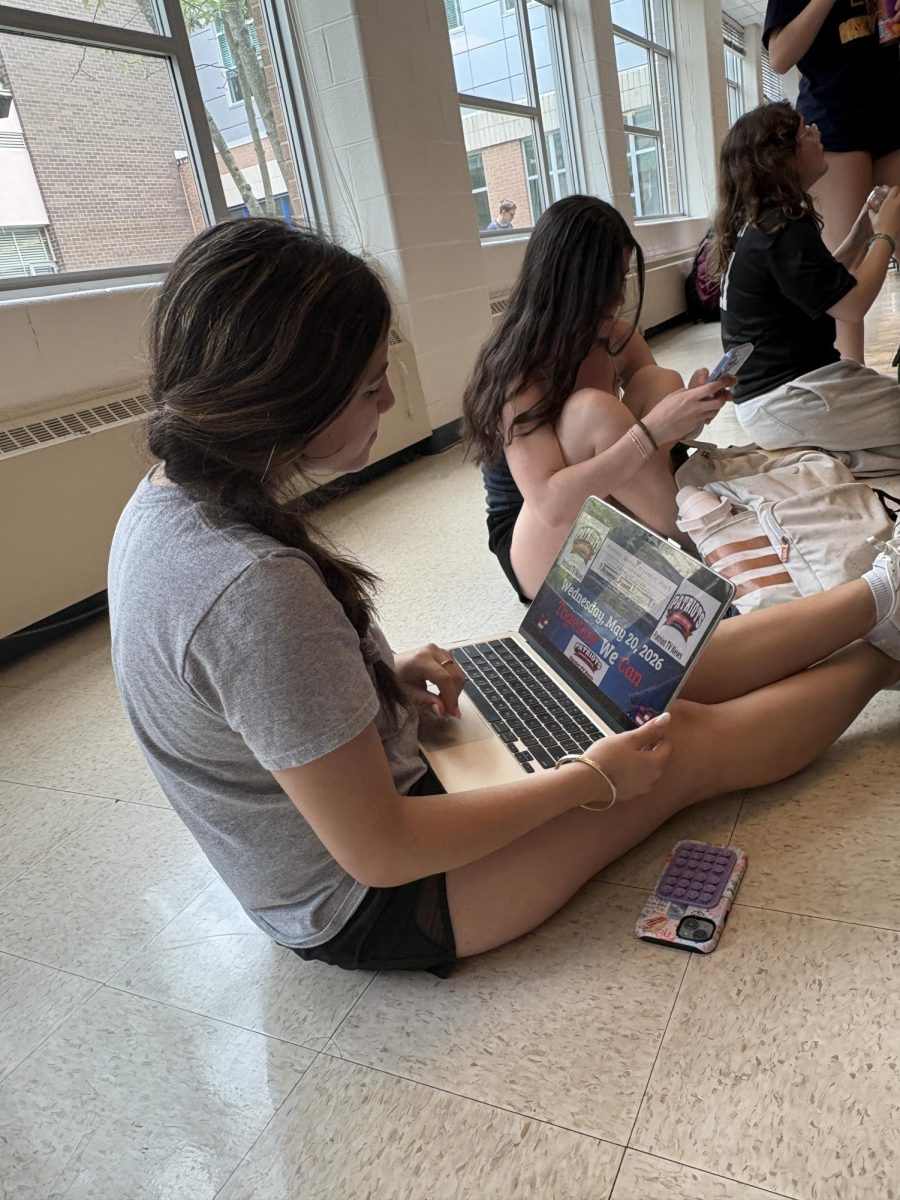
Another policy change that has only made students’ daily lives more difficult is limiting student movement during lunch to the first floor and cafeteria. By confining nearly 2,000 students into areas that were not designed to fit all of them at once, students struggle to find places to sit. Hallway zones that were previously shut off to students have been forced to reopen due to the lack of space. The outcome is packed classrooms and congested hallways that students and staff can barely navigate through. Areas that have suffered the most are the Commons and the gym, with countless students sitting in groups scattered on the floor.
For club leaders, these changes have made it nearly impossible to hold club meetings. With students no longer attending club meetings during advisory and with lunch spaces restricted and overcrowded, the majority of organizations have lost the only times during the school day when they could reliably meet. While after-school meetings remain technically possible, they are often difficult for students to attend due to transportation, sports or other commitments.
This issue is particularly detrimental for large organizations such as the Health Occupations Students of America (HOSA), DECA and Future Business Leaders of America (FBLA). These clubs rely on regular meetings during lunch or advisory to prepare students for conferences, share deadlines and prepare competitors. With major conferences taking place in February and March, the inability to hold meetings has left students without necessary guidance. Nampally, who has leadership in HOSA, said, “It’s just hard getting information across to our competitors…so it leads to a lot of uncertainty.”
Social and interest-based clubs have also suffered. Clubs that once provided students with opportunities to relax, engage in fun activities and connect with peers have lost the space and time to meet, weakening an important aspect of student life in the school community. Club leaders who put time and effort into preparing materials often see their efforts go to waste when students are unable to attend. Other clubs have not even bothered trying to hold meetings.
One of the supported and long awaited changes is the implementation of more security guards. Students and staff agree that the new faces around the school provide a sense of monitoring and control throughout the building. “I think our school needed that even before this incident, just because the school is so big,” Felterman said.
Despite this, students still question how this measure alone can truly improve long-term safety, highlighting the need for more effective security measures. Chi said, “it makes me feel a little bit safer considering that there’s more supervision, but overall, I don’t think I’d be protected if there was another school shooting to happen.”
In the aftermath of a frightening event, it is understandable why administrators are taking quick actions to protect students. Safety is always the first priority. On the other hand, these new policies that have reshaped students’ daily lives are failing to improve long-term security. While the new security presence has been encouraged, the other changes have come at the expense of students’ social connections, academic independence and extracurricular activities.
In the long run, these changes will not be sustainable. A school cannot function properly when students cannot find places to eat lunch, clubs are unable to meet and bonds between teachers and students cannot strengthen. As the community continues to recover, the goal should not be to remove important aspects of student life, but to find solutions that promote both safety and student culture.




Ariella Chi • Apr 16, 2026 at 9:09 AM
I agree. this is goated.