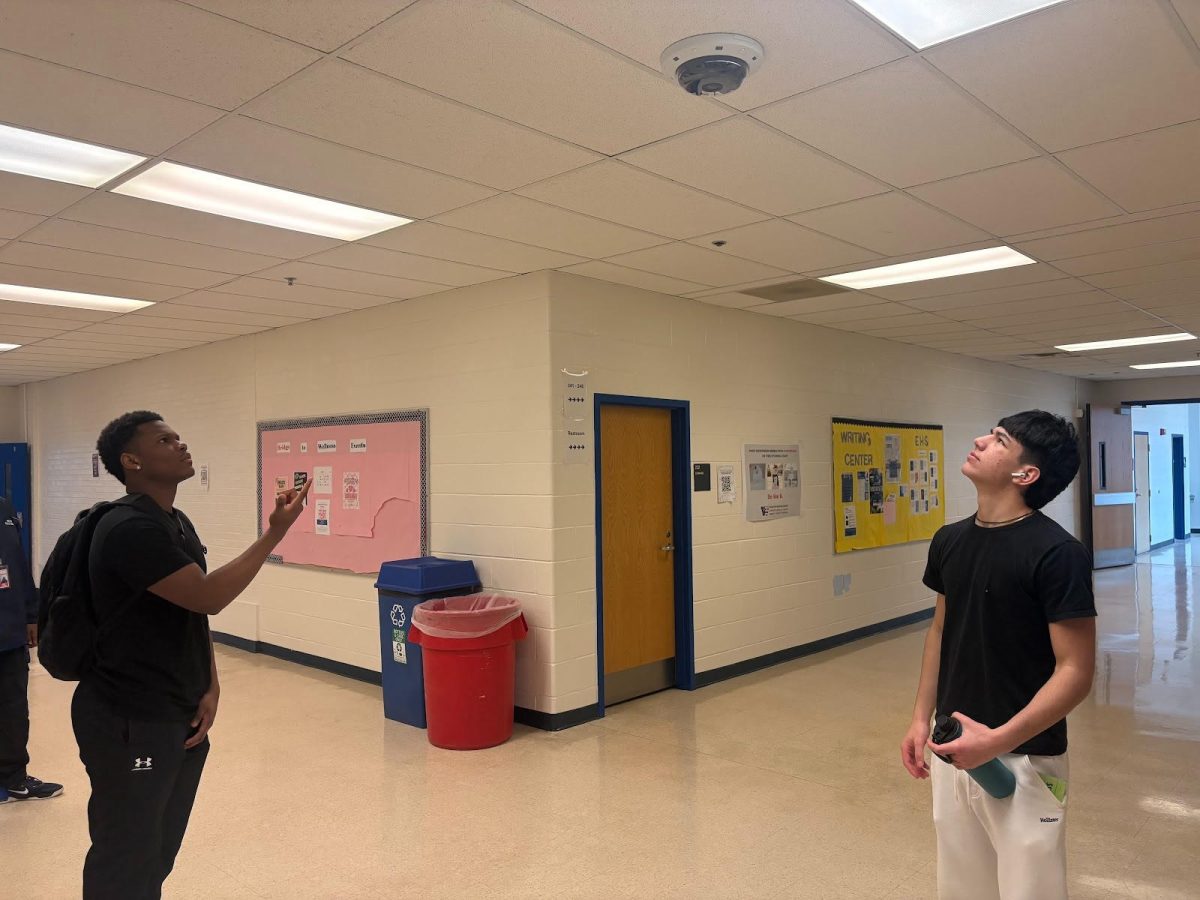
MCPS’s decision to introduce Volta AI-powered cameras into the hallways of high schools like Magruder and BCC on March 2 has sparked a growing debate about safety, privacy and trust.
While the district argues that this technology can help detect suspicious behavior and prevent incidents before they occur, students and parents question whether constant surveillance is a fair trade-off. Schools are meant to be places of learning and growth, not environments where every movement is monitored by algorithms.
With multiple security cameras around every corner, students feel they lack any privacy. Whether it’s just walking out of your classroom to grab water or going to the bathroom, security guards constantly badger students about having a pass. Although it’s just a one-month test run, this could lead to future full-time usage. As this new system rolls out, the community must carefully consider whether increased security is worth the potential cost to students’ sense of freedom and privacy.
Junior Noah Hurwitz said that as more cameras are being installed throughout the school, he feels less and less respected, but more and more like the school doesn’t trust their own students. Hurwitz also said that if they implement the AI cameras here, “I am not worried about AI misidentifying kids as it’s strong, but I could see the worries some have,” Hurwitz said.
AI detection systems would be a disaster, leading to misaccusations. Freshman Ella Carrick agrees, saying that she’s already heard stories of kids who have been falsely accused because of the way they walk. Carrick said, “This will affect students’ behavior [because it creates] an environment where you don’t feel comfortable [doing] what you want to do because there’s always gonna be an eye on you.”
However, the other point of view is that a surplus of security cameras makes the hallways safer. Freshman Joseph Davis thinks the new security cameras and the implementation of AI would not affect his ability to express himself as necessary in the halls, as he trusts MCPS to use the technology responsibly. Davis said, “I think constant monitoring changes the school environment because it makes the environment feel safer for students.”
The new AI cameras won’t hear and see everything, though, as Lionel Donovan, reporter for WUSA9, explains how the AI won’t be in certain private areas. Donovan said, “This AI does not record audio, use facial recognition, or track students from camera to camera. It also doesn’t operate in classrooms, restrooms and other private areas..”
Students should have a say in whether this gets implemented in their school, especially if it would lead to false accusations. Hurwitz said, “Students should definitely be asked and have a big influence on the implementation. I would feel frustrated if I were flagged incorrectly and I would push for the removal of AI-powered cameras.”
In the end, MCPS’s decision to test AI-powered security cameras raises important questions that go beyond just safety. While students feel more secure with increased monitoring, others feel a loss of trust and privacy that schools shouldn’t ignore. When students start to feel watched instead of supported, the learning environment begins to change in ways that could do more harm than good.
If MCPS wants to move forward with this technology, it must take student opinions seriously and ensure clear limits are in place. Safety should never come at the cost of students feeling comfortable, respected and trusted in their own schools. Paul Weyrich, an American commentator and activist, said, “Unfortunately, too many public school officials believe that cameras are needed to enforce order and discipline.”