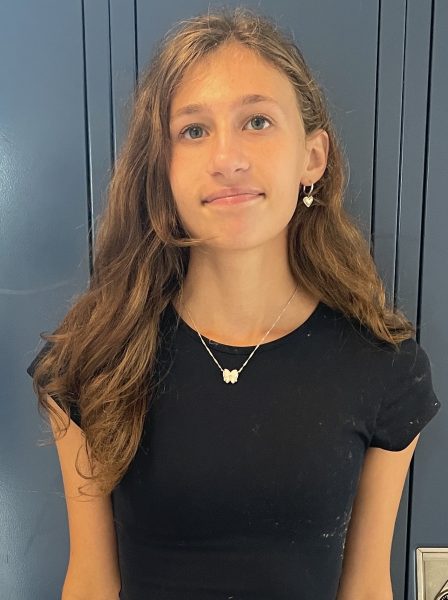
![Freshman Andrea Fernandez Cobo enjoys "reading" an audiobook while playing cards during the homeroom period in Barbara Silcox’s classroom on March 12. Fernandez Cobo uses Spotify so she can listen to the auditory versions of books she has in her library. “A book [that] I’ve listened to recently would be 'Twilight' on Spotify audiobooks,” Fernandez Cobo said. Photo by Danielle Gottesman](https://woottoncommonsense.com/wp-content/uploads/2026/03/7mOUWvplxabC3Iia135IyxAOgzGslIJJTdKuUEOO-1200x949.jpg)
Does the journey of reading start with the first word seen or the first word heard?
The first time you understood a story, the doors of reading opened. Before you could read, you were read to by others. Today’s readers may wonder: By using audiobooks you can understand stories auditorily instead of visually, but is this cheating?
One opinion is that a student learning to read won’t master the skill by only listening to audiobooks. Offering students auditory formats won’t assist in strengthening the ability to read off of a page, Beth Rogowsky, a professor at Bloomsburg University of Pennsylvania who studies visual and auditory learning, said. “When we tailor to a student’s learning style and we’re just giving them auditory formats, we are not reinforcing the reading skills that are so essential to becoming a proficient reader,” Rogowsky said.
Students should be taught to comprehend both visual and auditory content, regardless. However, only teaching kids how to understand stories visually limits versatility in learning. The process of storytelling began auditorily and can be a great way to help kids start the process of reading.
Another reason why audiobooks can be seen as cheating might be that it’s easy to lose information when you are listening to content rather than seeing it. The physical details of formatting and structure can be missed when content is visually consumed, English teacher Rachel Wilsdorf said. “Reading a book with your eyes actually makes you focus on the content of the book and the plot… I think it’s just going to expose you better to different words and different sentences and how things can be formatted. There’s a lot that authors do with words on a page. So if you’re listening to an audiobook, you don’t get some of that information,” Wilsdorf said.
However, there’s also information lost when you’re only seeing the words on a page. Audiobooks can provide insight into tone without needing to infer as much information. Hearing what is said can help gain a further understanding of the story and can aid in processing.
Others don’t consider audiobooks as reading because prerecorded content is more difficult to comprehend. According to Jeremy Brown, a writer for The Daily Egyptian, physical books allow you to reread meaningful quotes and invest more into what’s going on, which assists in understanding. “I once read an old novel called ‘Rabbit, Run.’ In the book, there is a line that says: ‘If you have the guts to be yourself, other people’ll pay your price.’ I must’ve reread that 10 times over… If I were listening to the audiobook, I’d hear that sentence with the same weight as the rest of the chapter. I invested more time into that sentence than if I heard it spoken once. My comprehension of the book is better for it,” Brown said.
However, the preference of one isn’t always the universal truth for all. According to Nadine Gabb, a cognitive neuroscientist, the way the brain processes auditory content and visual content is very similar. “There isn’t much of a difference between the brain network for reading and the brain network for language comprehension,” Gabb said.
Listening to audiobooks allows reading to be more convenient as it allows people to multitask without having to carry a physical book. People are able to “read” while doing other activities like driving or doing chores.
Audiobooks also allow reading to be more inclusive for people who struggle with reading physical books such as people with arm mobility issues, learning disabilities and issues with sight. Audiobooks widen the audience that can gain from reading, as it allows more people to participate.
Reading is an extremely beneficial way to spend time, regardless of if the story is consumed auditorily or visually. Stories were made to be shared in all different ways, to reach all different perspectives. Whether you prefer listening to books or reading off a page, there is no cheating in learning a new story.