Just 45 minutes down Clara Barton Parkway or McArthur Boulevard is our nation’s capital, an intellectual hub bursting with deep history and renowned cuisine.
With traffic, those 45 minutes quickly become longer, making D.C. a production to frequent. When students do visit, it can be a positive and enriching experience. However, under the new administration, ICE deportation efforts have heightened parents’ concerns about teenagers in D.C.. “It has impacted my parents’ opinions a bit because they don’t really want me going there as much. I think they’re afraid I’ll get hurt or ICE is going to be there, and think I’m an illegal immigrant because my parents are immigrants,” sophomore Vicky Lim said.
Students notoriously get excited for a Magic School Bus-like adventure, but MCPS students’ gain superior hand-on experience enhancing their learning through taking field trips to D.C. museums. All field trips can be beneficial, but a trip to the Holocaust Museum when reading Night, by Ellie Wiesel, in Honors English 10 or to the International Spy Museum while discussing Soviet espionage during the early Cold War during US History class provide the most relevant applications to students’ learning. “We have really good museums in our capital and I think they are so accessible so they are good experiences because it relates to what we are studying,” AP Human Geography and Government teacher Timothy Anderson said.
MCPS is a highly ranked county, which could in part be because of proximity to D.C.. According to the US World & News reports, this school ranks third in the state and 191st nationally. “There is a larger concentration of college-educated people and beyond in this region, compared to other parts of the country, maybe because of how much government work is done in this region. I think it spills into our culture of learning,” Anderson said.
Adjacency to Congress making decisions and the White House can ignite civic engagement in students. “Living near D.C. has definitely made me more interested in government and civics. This is especially due to the fact that it’s literally all around us, from monuments and museums to protests and debates. I think seeing the impact of leadership/advocacy up close and what people have to say about it has made me care more about how the government works, how I can be involved, and how it affects me and my future,” junior Manasa Iyer said.
Having parents working in federal departments such as the FDA and NIH can also make students feel more connected to the government at large. With that, the current government shutdown means that students’ parents have been furloughed. This could spark financial hardship and family chaos, which could impact student performance.
Going to the Lincoln Memorial for senior sunrise on the last day of junior year and the sea of colorful homecoming dresses by the Washington Monument in October, would be unusual in other suburban areas. But at this school, they have become rights of passage, like attending football games or graduation.
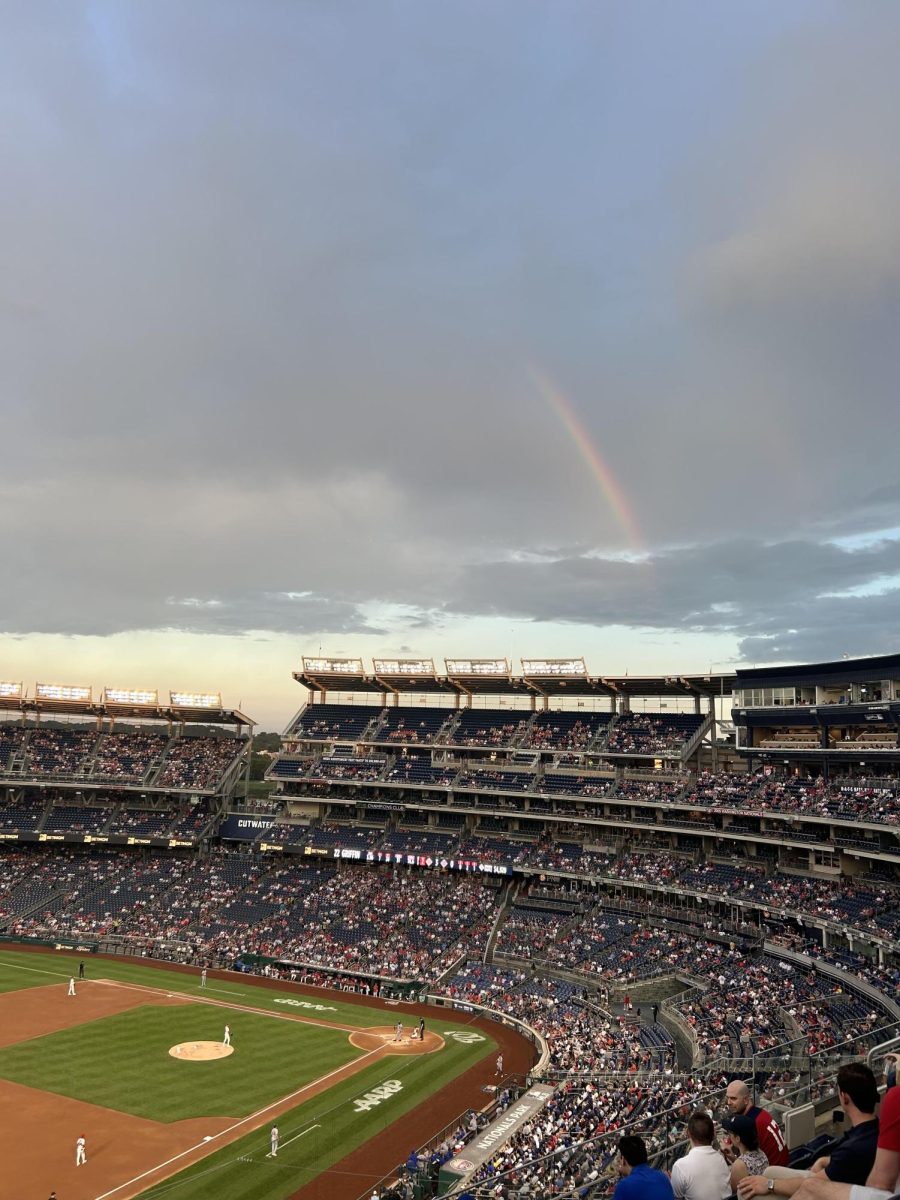
Other than on special occasions, students head downtown to visit the Cherry Blossoms in the spring, metro to Capitals games and stroll around Georgetown on weekends. “My favorite thing to do in D.C. is go to Georgetown because I can go shopping and eat since there’s so many restaurants and stores,” Lim said.
But beyond shoveling down a Baked & Wired cupcake or standing in the Brandy Melville line that snakes around the building in Georgetown, the proximity to a city provides students with exposure to cultural experiences that make them more worldly thinkers. “Living near D.C. has definitely helped me build real world skills that I know will help in college and beyond. Being so close to the Capital, I’ve had a lot of opportunities to learn how to communicate with many different kinds of people, stay aware of current news, and understand how decisions being made only a couple miles away actually affect my life as a teenager. It’s also made me more confident in adjusting to busy environments and managing my time due to how frequently opportunities can pop up and/or get cancelled out of the blue,” junior Manasa Iyer said.
In spite of safety and convenience concerns, living nearby the bustling political epicenter benefits students’ academic and experience. MCPS should simplify the process of coordinating field trips to encourage teachers to plan more excursions to DC’s museums and events. Also, as taking the Metro is an efficient way to get downtown, Metrorail should work with MCPS to provide every student with a Metro Card before graduation, putting students’ in the driver’s seat of expanding their own perspective.