
Are private trainers worth the time and money for student athletes?
The answer depends on the athlete’s goals, mindset, and current level of training. By the time high school sports seasons start, student-athletes may already be training year-round. Along with school practices and club teams outside of school, private trainers have become more common than ever.
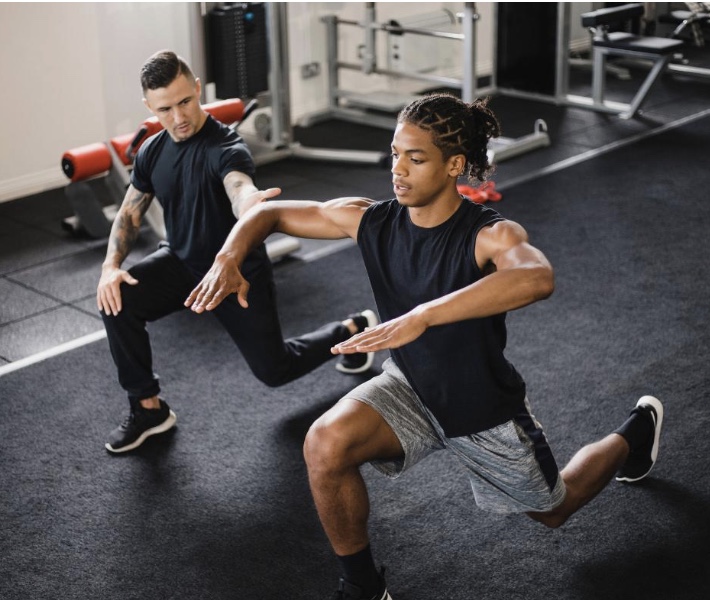
Athletes work with strength coaches to improve their speed and strength for that specific sport, or work with position-focused trainers who are seen to be more worth the money and time for athletes. For athletes, private trainers can be extremely helpful. A good trainer gives athletes individualized attention that coaches during team practices often cannot provide.
In large team settings, coaches focus on the whole group, while trainers can break down one athlete’s weakness and create workouts specifically for them. This can help improve speed, strength, agility, technique and confidence. “Starting to work with my private pitching coach brought me to another level and increased my confidence, my performance and my mechanics,” sophomore Ashton Yang said.
Private training can also help prevent injuries. Trainers who understand proper movement mechanics can teach athletes not only to prevent injuries but also to maximize their lifts, runs and recovery time. This is important because injuries are becoming more common in competitive youth sports. The injuries are also becoming more severe and are ending student-athletes’ careers in that sport. Athletes who train smart instead of simply harder often stay healthier and a step above their competition. “Getting a private trainer allowed me to work on what I specifically struggle with, and be shown how to fix it by a professional and someone who knows how to do it,” sophomore Sasha Rosenthal said
However, private trainers are not always necessary. Successful athletes can improve through consistent practice with their team, workouts in the gym and self-dedication and discipline outside of organized practices. There are scenarios in which athletes have relied too much on trainers while neglecting effort during regular practice.
No trainer can install discipline, work ethic and consistency. A trainer can only enhance and build what is already there. “Trainers are great for some people, but some think that getting a trainer will make them automatically good and skip practices and workouts. Instead, trainers are only useful for the right person,” senior Zach King said.
There is also the issue of cost. Private training sessions are expensive and are not viable for families that are already paying for equipment, travel teams, and school sports fees. Not every athlete needs specialized training to succeed, and spending large amounts of money does not guarantee better performance or college scholarships. And not all athletes have the natural ability to get a college scholarship.
In the end, private trainers can absolutely be worth it for the right student athlete, but only if the training matches the athlete’s goals and needs. A motivated athlete with a knowledgeable trainer may see major improvements and get a step ahead. At the same time, athletes can still succeed without private training if they stay committed by themselves and make the most of their regular practices. Ultimately, private trainers are a tool, not a shortcut to success.