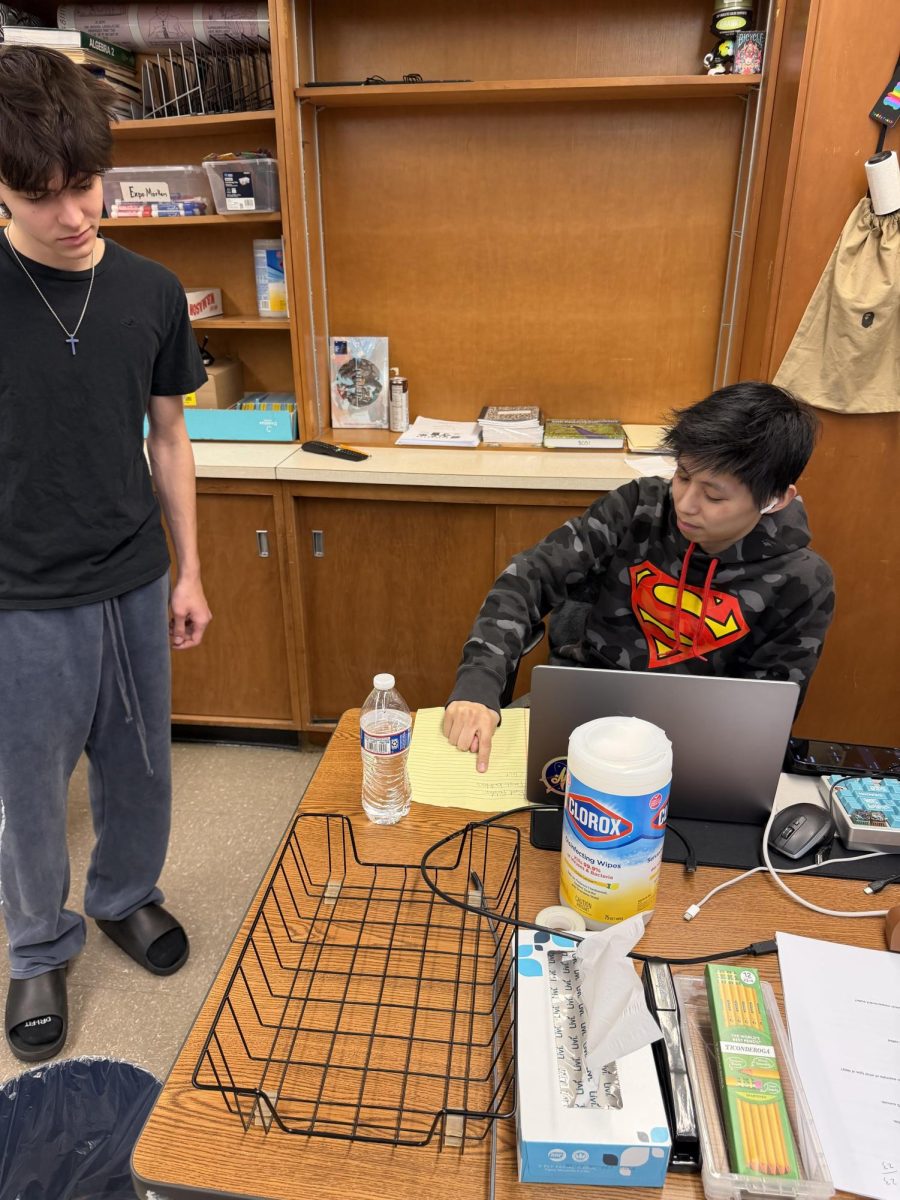
People may always know they want to teach, while others discover it after trying out different careers. Eddy Yang, a long-term substitute teacher, didn’t set out to become an educator.
Instead, his experience in neuroscience and research now influences how he teaches. “I didn’t always want to be a teacher, but in college, I started getting really interested in neuroscience,” Yang said.
Yang grew up close to this school, so coming back to teach here is meaningful to him. As a student, he was motivated but also easily distracted, working hard in his classes but struggling with time management. “I was both a good and bad student. While I mostly took honors/AP classes, did dual enrollment at MC and regularly went to extracurricular tutors and SAT classes, I slacked off more than I should have and spent too much time hanging out or playing video games with friends, so my GPA suffered a lot from that,” Yang said.
Growing up, Yang’s schedule was packed with academics, music and sports. “[I was] very busy and structured: I had weekly piano, violin and guitar lessons and was also in MCYO with weekly orchestra practice. I was also in an extracurricular program called EPGY in elementary school, where I took additional math and English classes that were a few years ahead of my grade level. On the sports side, I had a mix of swim and tennis lessons multiple times a week all throughout elementary and middle school,” Yang said.
After high school, Yang attended the University of Maryland, College Park, where he earned a Bachelor of Science degree in psychology with a focus on neuroscience. His interest in how the brain works and how people learn became central to his academic experience. “I just thought it was fascinating how a bunch of neurotransmitters (chemicals in our brains) are in charge of not only our mood and behavior, but the way we understand and perceive the world around us,” Yang said.
After graduating, Yang worked in a neuropharmacology lab at UMD, where he researched drug addiction and relapse. He even contributed to a published research paper. “I got hired to work in a neuropharmacology lab at UMD after I graduated, where I was responsible for an experiment on oxycodone relapse,” Yang said.
Yang started out in research, but over time, he realized teaching was a better fit for him. He enjoyed breaking down complex ideas and helping others learn. “I would find myself explaining neuroscience concepts to my friends and family whenever I got a chance, and I realized that I liked helping people understand new things,” Yang said.
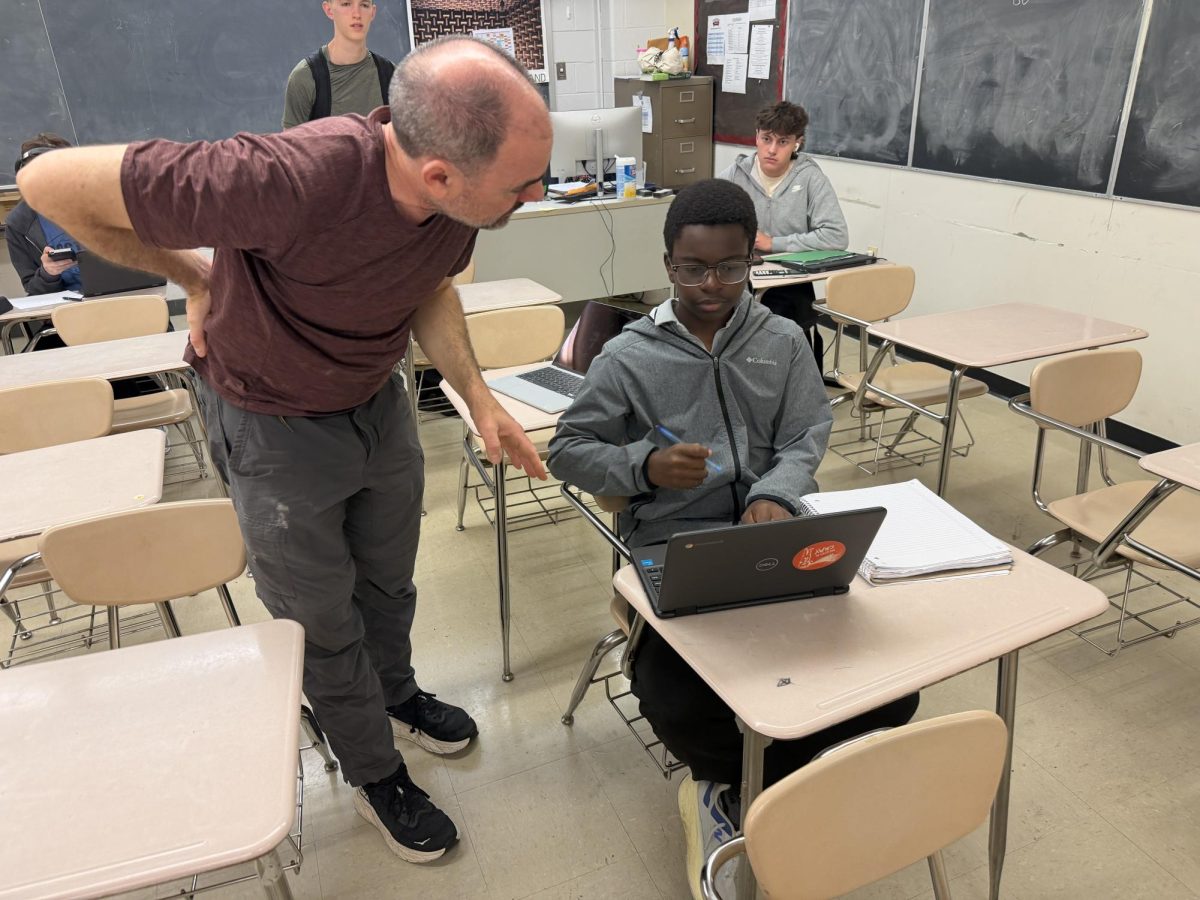
Now in his second year as a long-term substitute, Yang teaches math classes like Algebra 2, Calculus with Applications and Honors Statistics. He also taught Foundations of Computer Science before and liked the creative projects students made in those classes. “When I was teaching FOCS (Foundations of Computer Science), I really enjoyed the HTML and Scratch unit because I got to see students make a bunch of creative websites and games,” Yang said.
Yang describes his teaching style as focused on clarity and accessibility, aiming to make challenging material easier to understand. “If possible, I try to explain things in a way that makes sense, either with real-world examples or simplifying the concepts or processes behind complicated topics.”
Outside of school, Yang likes visiting New York City, going to live shows, taking street photos and watching movies. Even after being away, coming back to this school felt right. “I really liked my time at Wootton, the competitive nature of the school and teachers helped prepare me for college and beyond,” Yang said.
From a student’s perspective, Yang is seen as approachable and supportive, particularly in the way he explains material and interacts with students. His teaching style makes students feel comfortable asking questions and seeking clarification when needed. “His teaching style helps explain the content in the most simplest way, which is very helpful because I’m the type of person where concepts need to be broken down,” senior Nicole Khizder said
When giving advice to students, Yang encourages them to stay curious and pay attention to the world. “Learn as much about the world around you as you can, because the more you know, the more opportunities you’ll see,” Yang said.