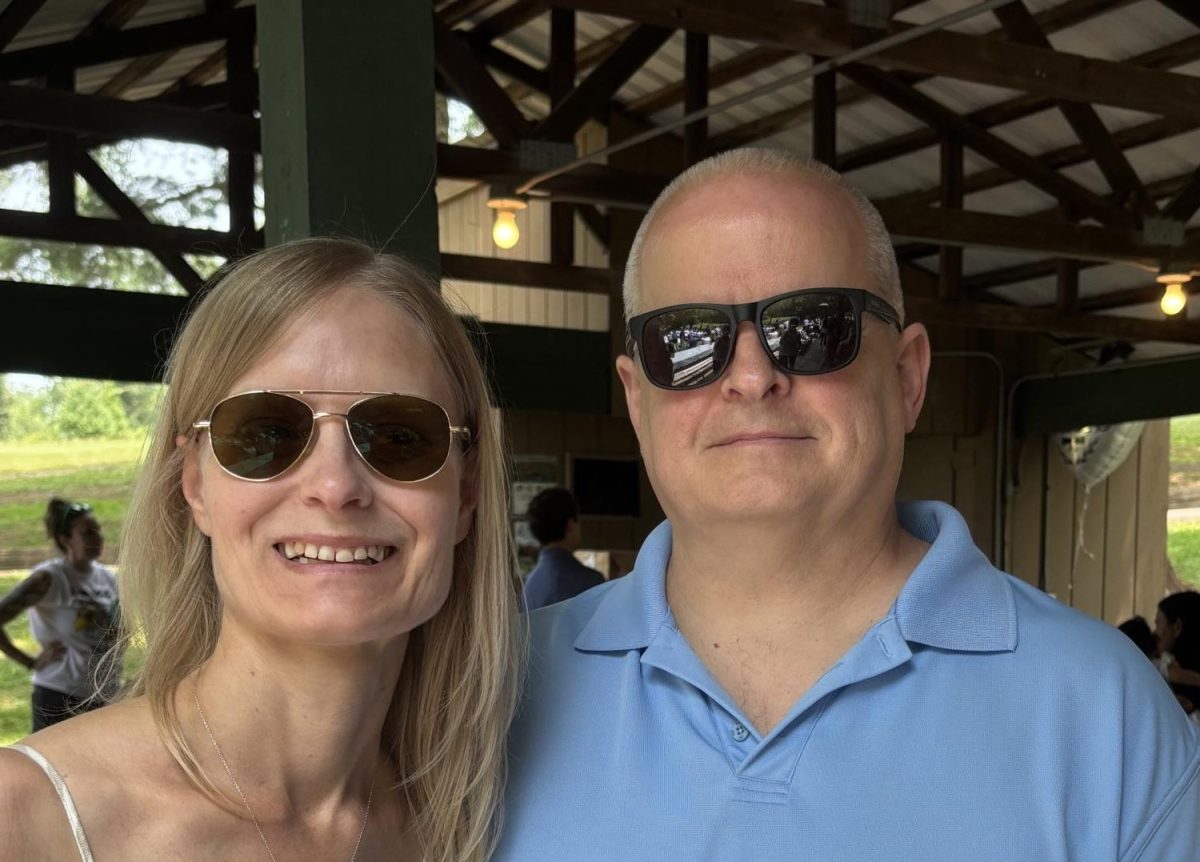
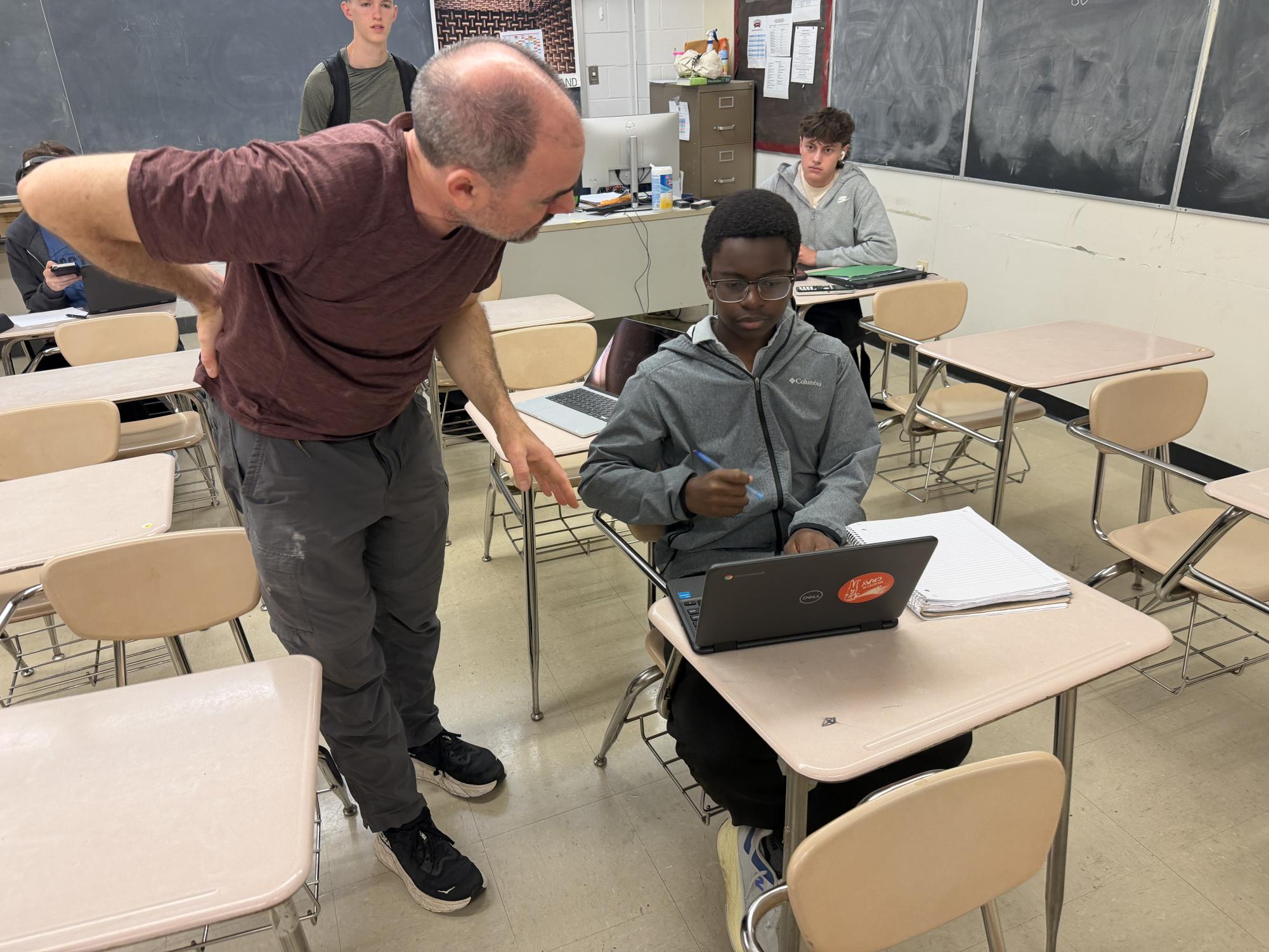

Since arriving in late April to take over former math teacher Albert Ticona’s classes, David McMahon has quickly become a familiar presence in the math department. Teaching students across multiple grade levels, McMahon has spent the past weeks adapting to a new environment while introducing students to his teaching style and academic background.
Before entering education, McMahon spent much of his career in scientific research. His background in neuroscience and research gave him extensive experience working with analytical thinking and problem-solving, skills that now carry into the classroom setting. “I began my career training as a neuroscientist and worked in NIH for two or three decades,” McMahon said.
According to McMahon, scientific research often involved explaining difficult concepts, mentoring others, and helping people understand complex information, which gradually led toward a career in education. “I found that a big part of what I did in scientific research had a lot to do with teaching and that’s when I realized I would like to become a teacher,” McMahon said.
Transitioning into a classroom in the middle of the school year can present challenges for both teachers and students. Classes had already established routines and pacing before the change occurred, requiring students and staff to adapt quickly. McMahon entered the position during the difficult final months of the academic year, a period that often includes review units, assessments and preparation for the final unit tests.
However, students noted that classroom routines remained organized despite the timing of the transition. “He’s actually a really good teacher. To be honest, I didn’t expect it to go as well as it’s gone after the sudden change,” sophomore Nathan Neches said.
Others pointed to McMahon’s classroom approach and communication style. Students described lessons as structured with a focus on making sure material is clearly explained before moving on to new topics. “He’s super nice and patient and it makes for a great learning environment,” junior Mahi Sharma said.
McMahon has positive impressions of the school community since joining Wootton. He noted the support from both students and faculty members during the transition into the position. “I absolutely love the Wootton school and community and I feel both the kids and the teachers really care,” McMahon said.
Teachers entering a new school environment near the end of the year often face the challenge of building relationships quickly while maintaining classroom continuity. In addition to preparing lessons and assessments, substitute and replacement teachers must also adapt to school policies, departmental expectations, and students’ learning styles within a short period of time.
McMahon’s background in scientific research distinguishes him from traditional high school math teachers. Experience working in neuroscience and at the National Institutes of Health provided exposure to technical and analytical fields closely connected to mathematics instruction. Students said his ability to explain concepts step by step has helped classes continue adjusting during the final months of the year.
As the school year approaches its conclusion, McMahon continues working with students across multiple math courses while becoming integrated into the community. His transition from neuroscience research to education reflects a career path shaped by both science and teaching.