

Every year, high school students set aside weeks for intense studying for AP exams in hopes of receiving a good score and increasing their chances of earning college credit. Students are often uncertain about the reason for taking these classes, aside from the general response “for college.” Although true, students need to understand what AP classes and college credits are and whether they are worth the cost.
According to the College Board, an American nonprofit membership association of over 6,000 schools, colleges and universities, “Credits are a recognition of the academic work you’ve done—the classes you’ve taken and passed. You’ll usually need 120 credits to get a bachelor’s degree.”
Suppose you receive a four on your AP Exam, and your college grants you credits for that score. That means you walk into your college with those credits even before you take your first class.
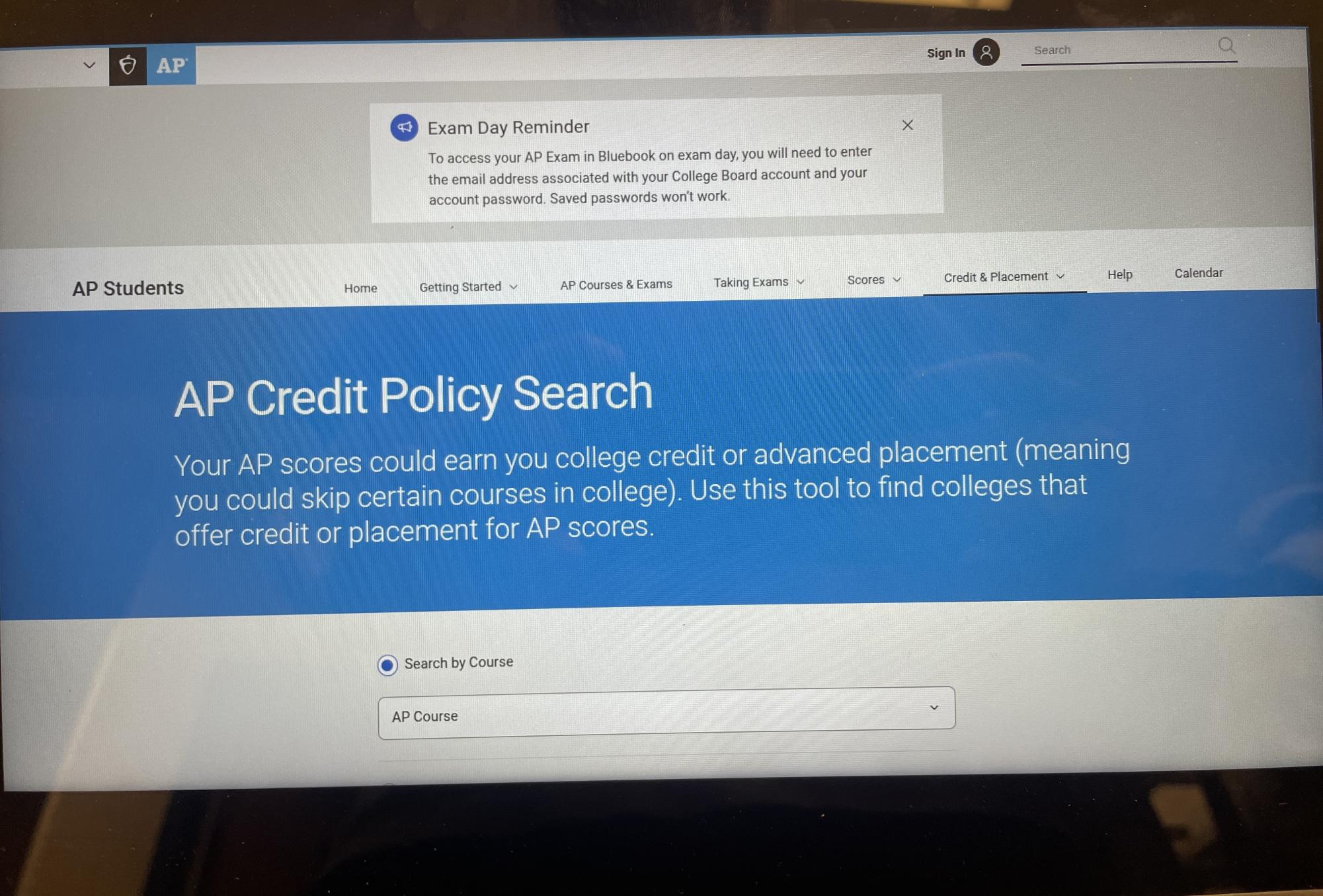
Colleges can recognize if your AP scores demonstrate your knowledge of the material in certain courses they offer. If so, they allow you to skip those courses, therefore saving money by reducing the number of classes you must pay for to graduate. This is called advanced placement. In some cases, one might receive both credit and advanced placement for a qualifying score. However, students are often uninformed about this. “I am aware of AP classes, but I’m still not clear on how Advanced Placement actually works in college,” junior Christian Lee said.
Once he learned about the significance and effects of credits, Lee said his perspective on AP scores shifted. “I now see that doing well on these exams could not only save me time in college but also money. Knowing that I could potentially skip introductory courses makes me even more motivated to study.”
Students may think that earning AP credits is too difficult. According to an article by the College Board, more than 50% of public colleges accept a score of three. Furthermore, an article from Crimson Education, a global college admissions consulting firm, noted that only nine of the 50 AP exams had a weighted average score below three, with four of those missing the mark by at least 0.07.
However, students need to understand that a score of three does not automatically guarantee college credit. Selective colleges often require scores of four or five for credit, and some may restrict credit based on specific subjects. Additionally, even public universities may not offer credit for lower scores.
While taking AP classes may seem like a cheat code in high school, students need to understand that these courses are rigorous. If a student takes too many, they will likely become incredibly stressed, resulting in a decreased grade. According to the Journal for the Education of the Gifted, a peer-reviewed academic journal published by SAGE Publications, a well-known scholarly publisher, students in Advanced Placement programs experience higher levels of stress than students in regular classes. “I try to create a balanced schedule between AP and easier classes so that I won’t be burnt out throughout the school year,” junior EJ Anderson, who currently takes three APs and a few honors classes, said.
In Montgomery County, the cost of AP exams is free, further supporting why students should take AP classes. If they earn the credit, they can save even more money. In other districts, AP exam fees are approximately $95 each.
All in all, AP college credits hold substantial value for students pursuing higher education. While the journey to earning AP credits can be challenging, recognizing the benefits can reinforce students’ motivation to excel. Being informed and knowledgeable about college credits is important for students pursuing college.