
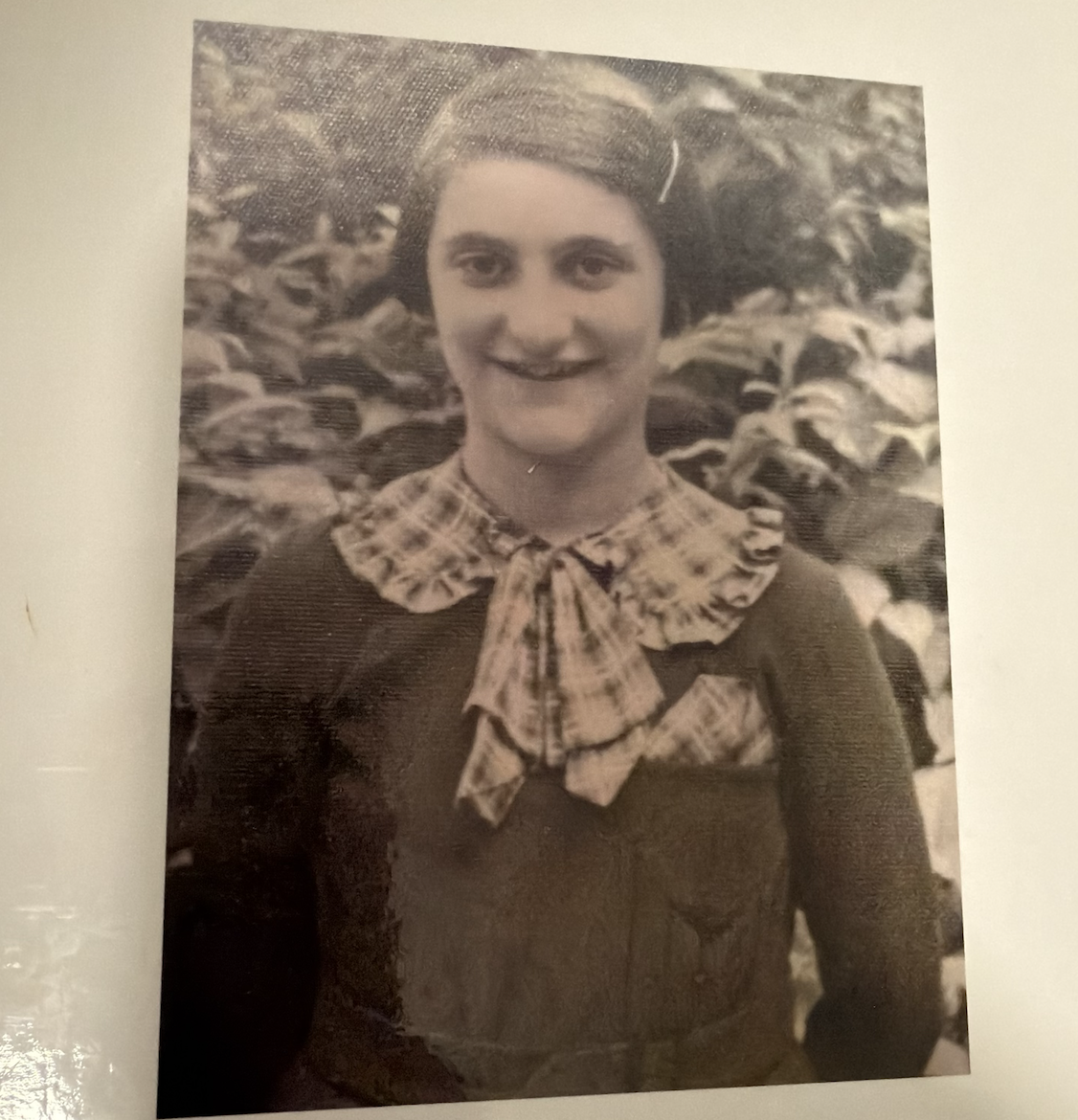
On March 12, 1938, a 13-year-old girl in Vienna, Austria, wrote in her diary: “What dark future are we walking towards? I look without hope to the next day.”
That girl was my great-grandmother, Esther Ticktin, my Safta. Before she became a mother, grandmother, psychotherapist and leader in Jewish feminist communities in America, she was a young girl, three years younger than me, watching Nazi flags fill the streets outside her window. She recorded the fear and the courage that would shape her life, as well as the lives of her children, grandchildren and great-grandchildren.
By April 29, 1938, her life in Vienna had already begun to take a horrible turn. Safta wrote: “Thrown out of School [Apr. 29, 1938] It was a hard day for my friends and me. We are not allowed to return to our dear school, to this school which I liked so much. It meant more to me than a house of learning. I spent three happy years in the school, and it was my second home. What beautiful memories connect me with this old gray building with the green dome.”
The next few months brought more uncertainty and fear. In July 1938, she recorded the devastating news of being evicted from their home: “We got an eviction notification for our apartment, a beautiful sunny apartment in the third district. It was in a dignified, noble neighborhood, [with] a large garden as a courtyard. I lived with all this wonderful life, receiving and giving love. Now it’s all supposed to be over. Gone are all the joys and everything really. We want to get away, absolutely far away from here… we will probably go [to America], and then we too will be refugees.” Ticktin said.
And then came the horror of Nov. 10, 1938. Kristallnacht, the Night of Broken Glass. Ticktin witnessed the violence from her apartment: “The next day, Nov. 10, we had no opportunity to go out. All of the synagogues were burning. What an experience. We saw everything out of our windows… Every moment we ran to the window. At the slightest sound, we jumped. Our knees kept on trembling. We didn’t have a drop of courage or hope in us… Suddenly, we saw under our window a heap of books and papers burning… Sifrei Torah, papers from the youth group are lying in ashes around us… I had to lie down. This day passed, and then another week began. The Heim, my youth group home, is totally demolished. The doors have huge holes through which you can look in. The entire hallway has shattered glass and torn papers.”
Even more terrifying were the constant footsteps of the SS, Hitler’s black-shirted men, marching through apartment buildings, taking radios and personal belongings. Ticktin wrote: “What I was afraid to write at this time is that we heard the footsteps of the SS all day long. They were marching up the stairs of all of the apartment buildings… At 5:00 p.m., two men entered our apartment. They asked Papa some questions. They took two books from the hallway bookcase… Then they left, and we listened again to their footsteps on the stairs…”
Through these unimaginable hardships, Safta’s father, Leo Kelman, took quick action to protect his family. With the help of relatives abroad and a lot of courage, they escaped Vienna, eventually arriving in Brooklyn, New York, in April 1940.
Life in America was not an easy transition, especially for teenage Ticktin and her family. They were forced to rebuild their lives from scratch, working long hours in a family grocery store and learning a new language. Ticktin persevered in this foreign land where she became a psychotherapist, a guide to Jewish women and communities and a living example of resilience and kindness.
I remember her house as a child, a building in D.C. with long-winded stairs and long High Holiday services. I remember her gentle personality and her patience with all of us. She prayed for the world and for all of us, hoping no group of people would ever have to endure what she and her country did. She was my Safta, and she was the matriarch of our family. But through her diaries and memoirs, I can see her as the scared but brave teenager she once was. She experienced horrors and destruction of her home that I could never imagine, but she built herself up and created a big and loving family.
Her words and experiences serve as a powerful reminder that the past is not distant. It lives in the traditions we keep through generations and the stories we pass down. After her death in 2017, sharing her story is my way of keeping her memory alive, so future generations and all my little cousins can know her courage and her unending spirit.