AP Research students are now settling down with their research topics and made it official with their annual ring ceremony on Nov. 12. After months of planning and organizing their ideas, all students were required to participate in a ceremony that finalized their topic choice and marked the beginning of a long journey for each one of them.
AP Research is the next class after AP Seminar in the Capstone route. Students who wish to receive a Capstone diploma must complete and pass both courses, along with other requirements. The classes are both based on research, but the key difference between AP Research and AP Seminar is that in Seminar, students analyze and synthesize information from primary sources, while Research is where students conduct their own research to add to an academic field. AP Seminar has two projects and an exam, while research only has one, year-long project. “I like that we have a calendar in AP Research and that the teachers work efficiently together. I also think it’s great that we get to explore our own interests with our topics and focus on them for the whole year,” AP Research student Maya Bellamy said.
Students have been preparing for the time when they would have to start the research process of their actual topics throughout the beginning of the year. So far, their biggest assignment was the Mini Group Project, which, as a group, walked them through the basic steps they will need to follow for their own research project. “I chose my research topic because it is something I have been interested in for a long time. I’ve always been fascinated by the link between caffeine and students and what draws them to it so I chose to study that,” AP Research student Grant McGraw said.
The Ring Ceremony is a fundamental and important part of AP Research as it marks the day they become committed to their research topic. Students are required to complete a proposal for their topic before the ceremony and recite vows, which creates a wedding-like process. The point of the proposal, ring pops and vows is to make the students feel as committed to their topic as they would be in a marriage. This is because students are typically not allowed to change their topics after the ceremony, despite the doubts or difficulties they will inevitably face. “After the time of the proposal, the students are really not allowed to make any major changes to their topic. They can tweak it or come at it from a different angle, but they can’t make wholesale changes. It’s a sign that they’re moving forward with this topic,” AP Research teacher Michelle Hanson said.
Now that the students are “married” to their topics, the challenging part of the course begins. Students will stick with their topic for the remainder of the year and have to research scholarly sources and combine that with their own research to write a paper and create a presentation. Additionally, the course has had changes due to the rising use of AI, making it difficult to assert that a student’s work is authentic. Therefore, students are required to follow the steps their teachers tell them to, to ensure that their work is done without the influence of AI and that it is traceable. “We’re asking them to write down their notes in a way that we can collect them, whether it’s annotating an article with Kami or just taking notes on a Google Doc. The goal is to get the students to a place where they don’t have to use AI to do the work for them because they already have it done, ” Hanson said.
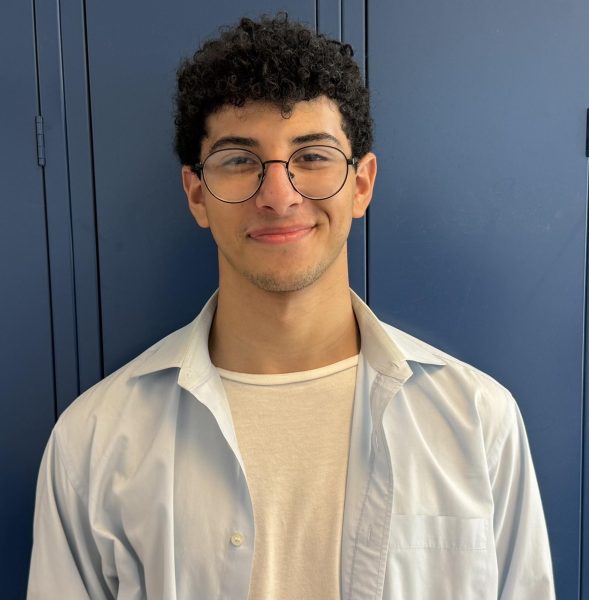
Caption: Seniors Maya Bellamy, Emory Scofield and Ahmed Ibrahim participate in their AP Research Ring Ceremony with their ring pops and written proposals to finalize their chosen topics. The ceremony is a practice that is commonly used across the country.