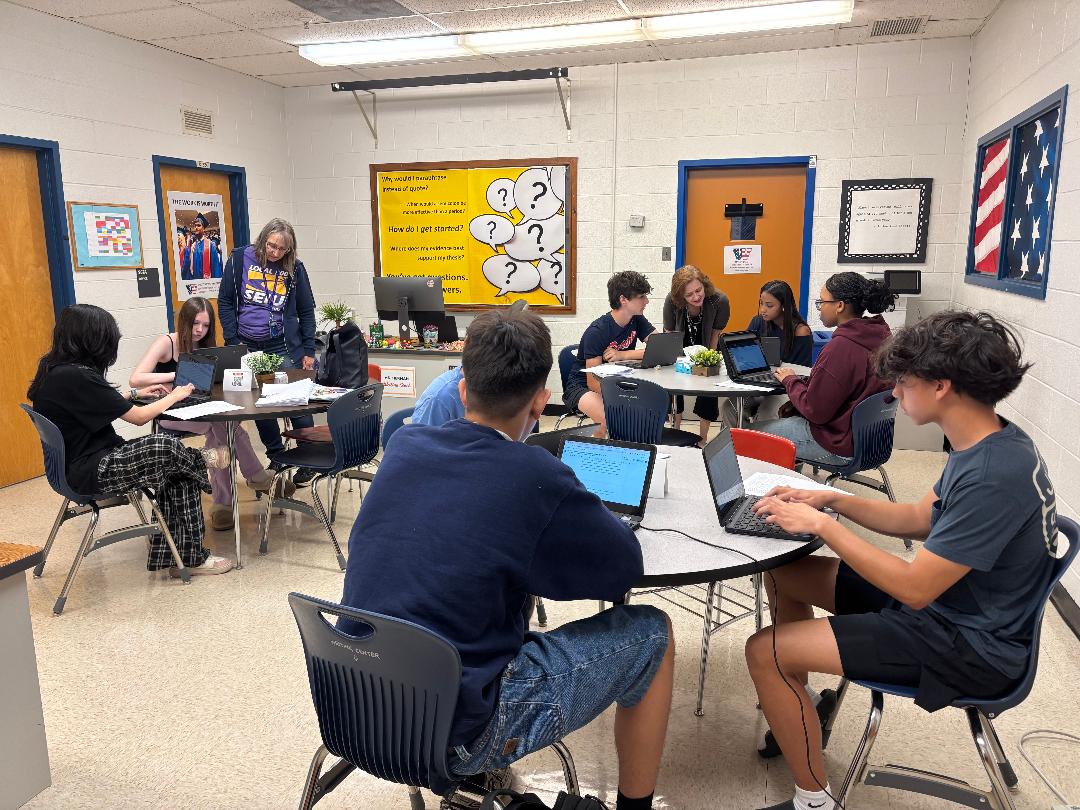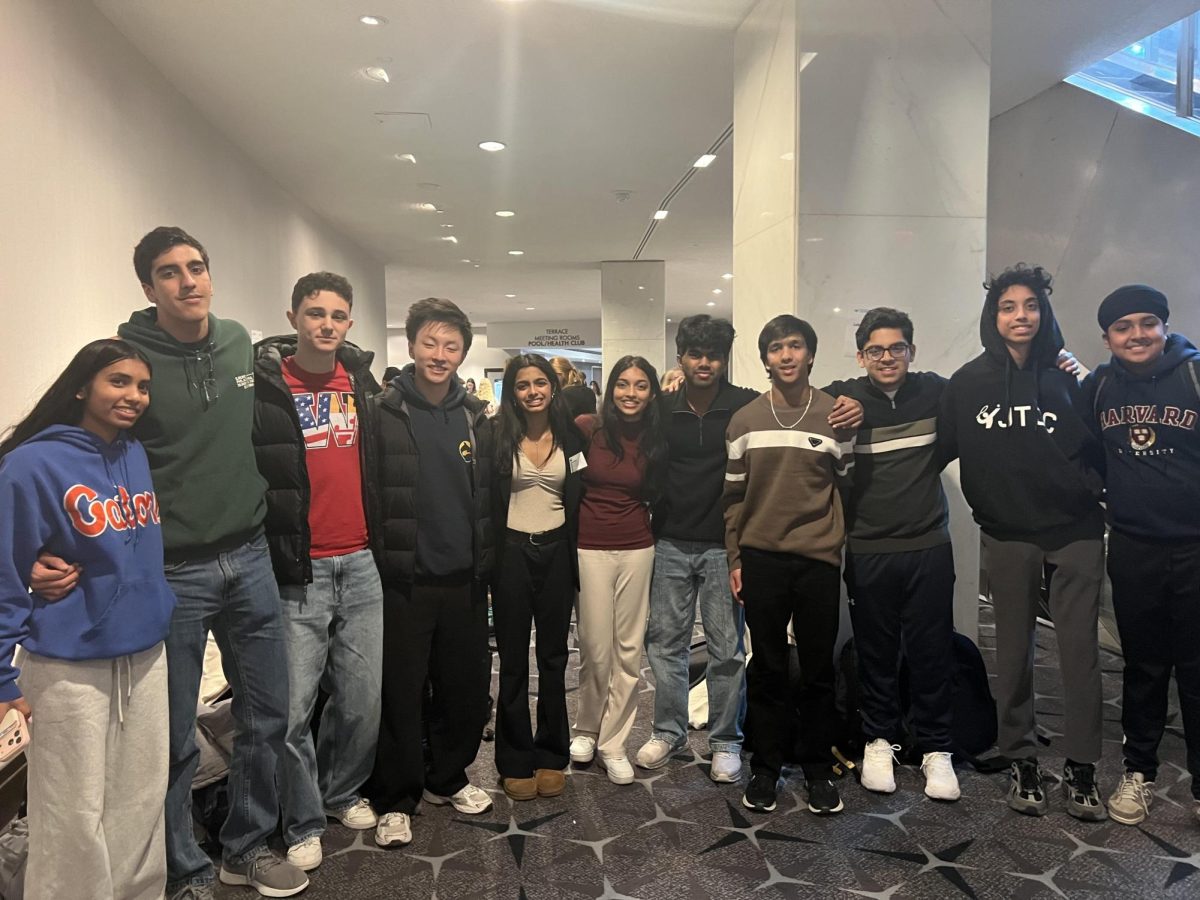
Students from the Model UN club traveled to Washington, D.C., on Feb. 12-15 to compete at the North American Invitational Model United Nations (NAIMUN) conference hosted annually by Georgetown University, where they won two awards.
Wildly regarded as the most prestigious high school conference in the country, NAIMUN drew over 3,300 delegates from more than 20 countries, creating an environment that was as intellectually rigorous as it was diverse. “I have been to a few collegiate conferences, and there is definitely diversity. But at NAIMUN there was so much more diversity, as there were people commuting from all across the nation, like Alabama and Chicago, but also people coming from South America, and one delegate in my committee was from Nigeria. People in different geographical locations due to cultural backgrounds and more have different perspectives on political, economic and social issues that we debate in Model UN,” senior co-director general Diya Khetan said.
Delegates competed across a wide variety of committees, each tackling complex global issues. Khetan’s committee debated the regulation of deep-sea mining and was joined by a professional guest speaker specializing in environmental preservation and climate change. “Sometimes kids get so caught up in awards that they don’t actually truly connect with the issue at hand, but the speaker was honestly so moving, and I think everyone in the room felt so connected towards the issue,” Khetan said.
Other delegates took on less conventional roles, like senior co-director general Nikolai Prykupenko who was assigned to represent Michael Kratsios in a White House Situation Room committee, where debate centered on real-world U.S. domestic and foreign policy challenges, including a debt crisis in Argentina and a Hollywood labor strike. “The most challenging part of representing Michael Krastios was balancing his personal beliefs with my own. In Model UN, we’re expected to largely adhere to and reflect on the principles that drive our respective characters, but are also given some liberties to liven debate, and striking a balance can sometimes be difficult,” Prykupenko said.
Junior Aashvi Gangakhedkar competed in the International Organization of Securities Commissions (IOSCO) committee representing Jordan, where debate focused on establishing international cryptocurrency anti-money laundering regulations. “The atmosphere was incredibly fun, friendly and bustling with opportunity,” Gangakhedkar said.
In the wake of a recent, difficult moment for the school community, the group still decided to attend. Two delegates earned international awards, including one delegate who claimed their first international recognition. “I am incredibly proud that our team of 25 delegates stayed strong and attended despite the recent school shooting. Our delegates performed better than ever before,” Gangakhedkar said.
Overall, students who attended the conference returned with a larger sense of civic awareness. “I think, regardless of what field you decide to pursue when you get older, it is so important that you are well-rounded and are aware of what’s going on politically, economically and socially in the world. The issues that we discuss in committee are issues that everyone should be aware of, regardless of the fact that you’re a doctor or computer engineer. It affects everyone,” Khetan said.