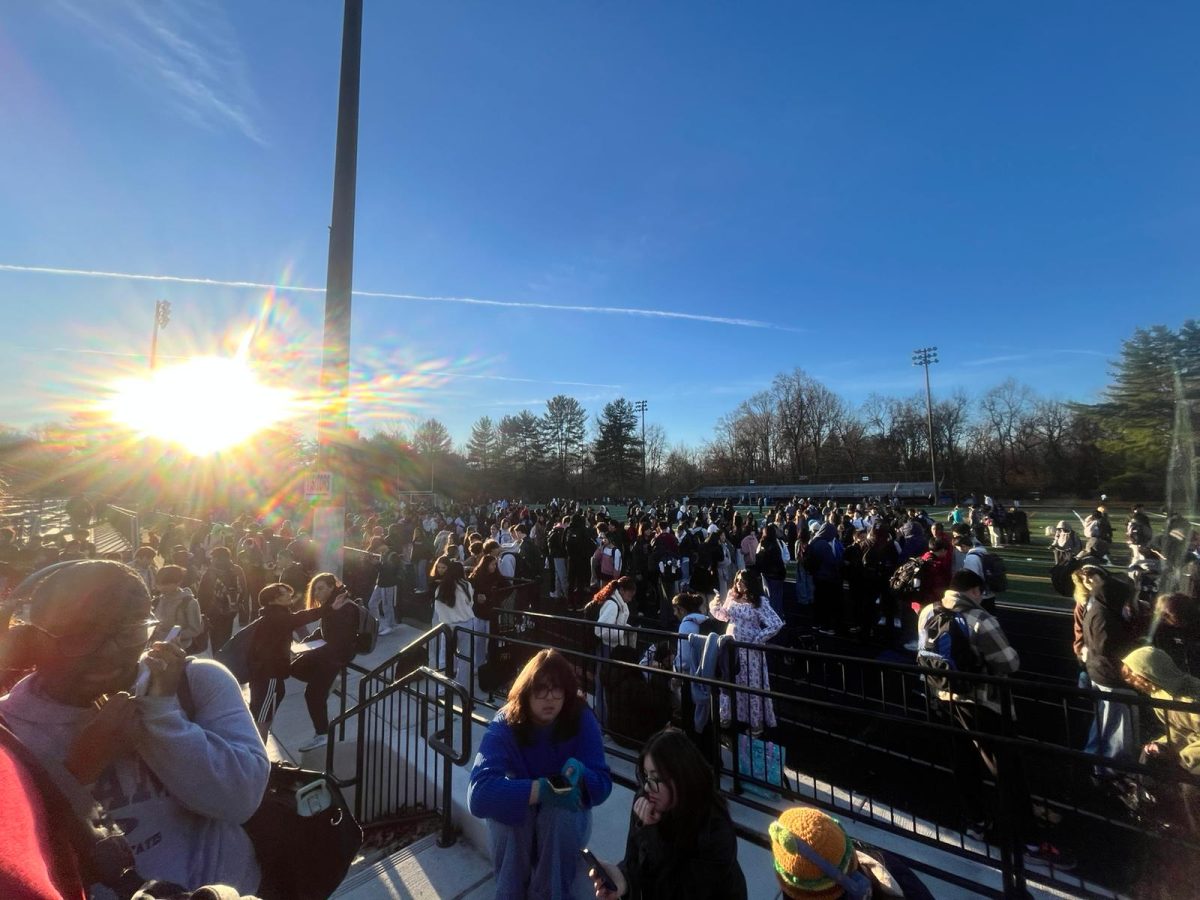
As students wait for further updates on possible relocation to a new school, the building continues to deteriorate around them. Rusted pipes, missing and moldy ceiling tiles, broken bathrooms and more have left students begging the county for changes in the building. Gas leaks are the newest addition to the list of building problems, now having caused evacuations on multiple occasions in this school year alone. These dangerous situations are serious interruptions to learning and can leave students falling behind.
Most recently, on Dec. 12, a significant gas leak caused by a faulty boiler room component filled parts of the building with the extremely unpleasant smell of gasoline. Regarding the incident, Dr. Joseph Bostic said in an email, “Because of the location of nearby air system intakes, the odor may occasionally be drawn into the building, which is understandably concerning. To mitigate these occurrences, the MCPS Facilities team has made adjustments to help reduce the potential for gas odors until the equipment is replaced by Washington Gas.”
This incident was not isolated, however, as an additional gas leak prior to Thanksgiving Break resulted in strange circumstances for students. The early-morning incident forced students already in the building to stand outside in the cold for multiple hours before eventually moving up the hill to wait inside nearby Robert Frost Middle School. Those not yet in the school, however, waited in cars or even left as the building was not deemed safe for multiple hours. Junior Luca Phillips said, “The gas leaks make me feel like the school is falling apart.”
Past their annoyance and interruption to learning, gas leaks pose a serious safety concern. Gasoline vapors are toxic and can cause a wide range of medical issues if inhaled, including long-term nervous system and organ damage. Additionally, even the smallest of sparks can ignite aerial gas, immediately setting fire to the building. For these reasons, the MCPS policy regarding gas leaks is the same as that for fire or infrastructure problems: an immediate evacuation of the entire school.
Every minor leak to the school’s senior gas system interrupts instruction for the whole building. Over time, this can cause problems for fast-paced or high-level classes that rely on scheduling consistency. Sophomore Nathan Neches said the gas leaks show him that students here attend “a run-down school” that “deserves to be renovated.”
The now more than 55-year-old building continues to crumble, and these recurring gas leaks have only furthered talks of moving students elsewhere. Dr. Bostic addressed this in the same email from Dec. 14: “We recognize that [our school] is an older building, and we understand the community’s broader concerns about facility needs and long-term investments. While this specific issue is related to external utility infrastructure rather than the school’s internal systems, we take all safety concerns seriously and remain committed to working closely with Washington Gas to ensure a safe environment for students and staff.”