A new Maryland speeding law has been in effect since Oct. 1. Now, the faster a driver goes above the speed limit, the higher the fine imposed.
This new law includes more no-turn-on-reds, as well as more cameras being installed around the county. Students seem to be in support, as safety is a big concern when it comes to student drivers. “I think the new cameras are valid because speeding can be very dangerous to the students who are walking,” senior Bryson Filbert said.
The new Maryland law states that speeding 12 to 15 m.p.h. over the limit is a $40 fine, 16 to 19 m.p.h. is a $70 fine, 20 to 29 m.p.h. is a $120 fine and 40 m.p.h and over is a $425 fine. Reckless driving is also considered 30 m.p.h. over the limit and penalties could result in up to 60 days in jail and up to a $1,000 fine. Also, 140 new speed cameras and 76 red light cameras will be installed in the coming months around the county to reduce speeding and reckless driving. “I do support the new fines and penalties as they encourage drivers to stay closer to the speed limit at a higher extent due to the stricter regulations made,” senior Maxwell Scherr said.
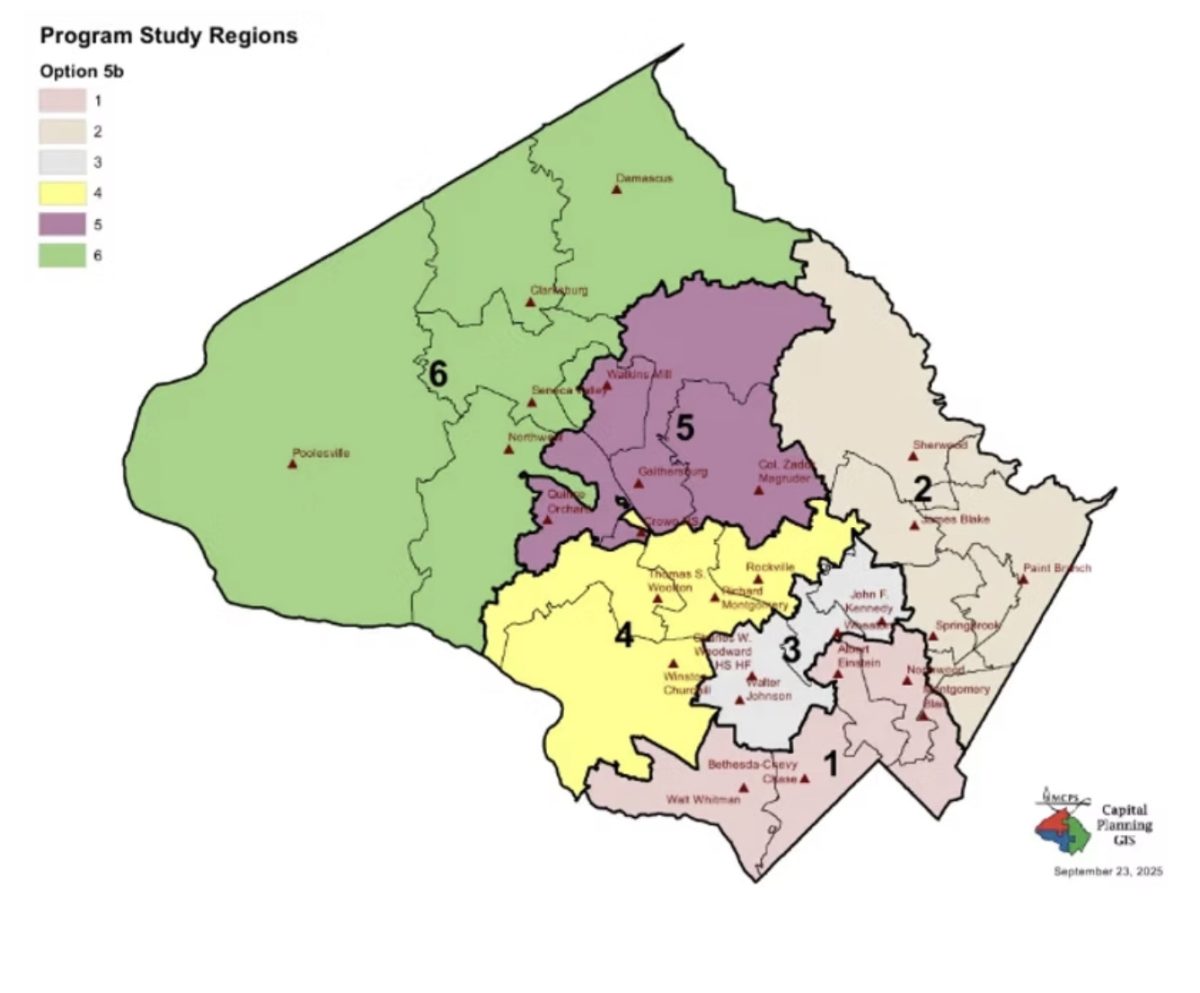
A related issue here, which has been brought up at townhalls, is that this school has a closed lunch policy. One of the reasons cited for the closed lunch policy is that students would need to speed to Fallsgrove or other centers for food to be back at school in time for learning. Schools like Churchill, WJ and RM all have open lunch policies and speed cameras surrounding their schools. One benefit to these new laws could be an open lunch policy in the future since the safety concerns about speeding would be addressed. “I think students should have open lunch. Many students don’t get the opportunity to make their own lunch or have someone make it for them, and their only resort is cafeteria food. But students shouldn’t have to choose between the same couple of things every day and not be able to eat what they want. Richard Montgomery has open lunch and I’m sure plenty of other schools in the county do as well. If Wootton is concerned about the safety of their students, these new speeding laws would be an enormously big change for the greater safety of students, and could make leaving the building much less hazardous,” senior Abby Goozh said.
This new law may be especially stressful to new drivers as, when learning to drive, mistakes and mishaps happen, and receiving a fine can lead to a loss of confidence. Those frustrated with the law may feel that it will not encourage safer driving as navigational apps like Waze alert drivers when cameras are near and urge the driver to slow down so they can avoid fines.
Despite those concerns, students report feeling increased safety due to the increased fines. “I think that the new speeding penalties being enforced are an important safety precaution for all drivers on the road. Speeding is a big factor in injuries or even fatalities, and something was needed to be done to more strongly reduce the amount of times those happen,” Goozh said.